
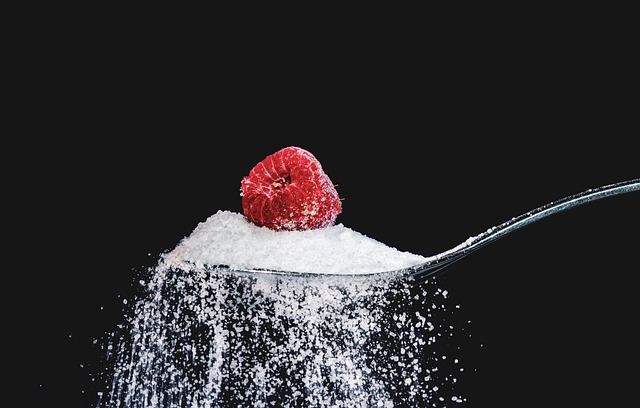
Here is a list of suggestions for types of sugars, as well as some translations.
| Product | Substitute /German Name | Information | Picture |
|---|---|---|---|
| Castor Sugar / Strooi suiker | der Streuzucker or Feinster Backzucker. | Caster or Castor sugar is finely ground granulated sugar. It’s also called superfine sugar. It dissolves more easily. It is not as fine as confectioners’ sugar. Granulated sugar will usually work just fine as a caster sugar alternative. TIP: Caster sugar can be made at home by processing granulated sugar in a food processor for a few seconds. However, one cup of granulated sugar does not equal one cup of caster sugar. 1 cup of caster sugar = 225g 1 cup of granulated sugar = 220g | 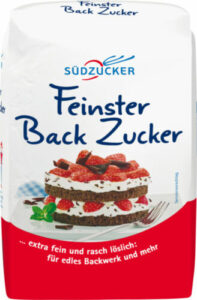 |
| Icing Sugar / versiersuiker | der Puderzucker | Extra finely ground refined sugar. It is used to make icing, dusting and decorating cakes, pastries and desserts. | 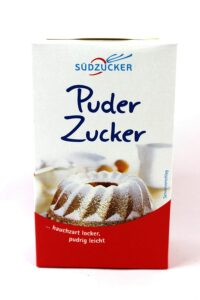 |
| Preserving sugar | Gelierzucker | Consists of sugar, pure pectin (e.g. apple pectin) and citric or tartaric acid. It gives jams, marmalades and jellies full aroma, perfect sweetness and a long shelf life. There are three types of preserving sugar: Preserving sugar 1:1 is used for preserving jams and jellies. Preserving sugar 2:1 is used for less sweet fruit spreads in a 2:1 ratio, i.e. two parts fruit are boiled with one part sugar. Preserving sugar 3:1 for fruit spreads is used in a 3:1 ratio, i.e. three parts fruit and one part sugar | |
| Canning sugar | Einmachzucker | Has somewhat coarser crystals. Because these dissolve more slowly when they are boiled, there is less unwanted foam when preserving jams and compotes. | |
| Sugar cubes | Würfelzucker | Sugar cubes is sugar that is moistened and pressed into molds and then dried. Sugar cubes are easy to dose and quickly dissolve in hot drinks. | 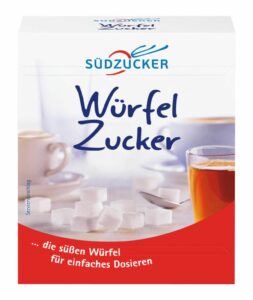 |
| Sugarloaf or cone | Zuckerhut | In the sugar loaf, the sugar is pressed into a cone. It is particularly popular in the cold season for punch or Feuerzangenbowle. | 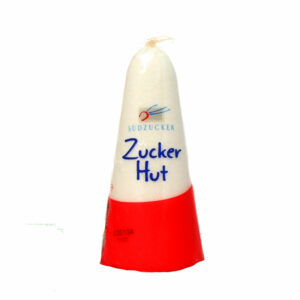 |
| Crystal sugar | Hagelzucker | Consists of particularly coarse-grained, granulated sugar. It is particularly suitable for decorating tea and coffee biscuits, yeast plaits and Christmas baked goods, as well as sprinkling on biscuits. | 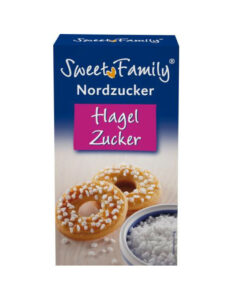 |
| Brown Sugar | Brauner Zucker | refers to different types of sugar that have their brown color in common. For example, brown sugar can be derived from brown candy syrup, where caramel and browning agents enhance flavor. | |
| Rock sugar | Kandiszucker | is obtained in various sizes from pure sugar solutions through slow crystallization. White candy is made from light sugar syrup and brown from a caramelized sugar syrup. It is available in different forms: white rock candy, brown rock candy, Kluntje, crust or stick rock candy, crumbly or crumbly rock candy. Rock candy is mainly used to sweeten tea. Depending on the variety and taste, it can also be used excellently in the production of liqueurs, rum pot or grog and punch. | 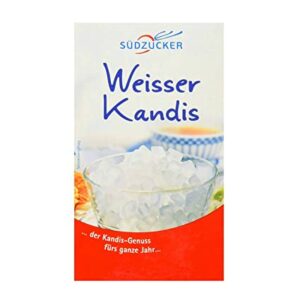 |
Meat
German meat cuts are different from those in South Africa. South Africa tends to follow the British way of cutting meat.Below is a explanation of the

Substitutes – Drinks
Looking for Milo, Horlicks, Frisco, Ricoffy or Lime Cordial? We compiled a searchable list of substitutes for some of the popular hot and cold drinks
Substitutes – Other Products
Here is a list of substitutes and translations for general food and kitchen items like cling film, maize meal, custard and biscuits Related content
Frozen products
Here is a list of suggestions for ready-made pasty (dough) products and some translations. Related content Inspiration
Baking ingredients
For all of the passionate bakers out there! We have thoughtfully compiled a comprehensive list of alternative ingredient options that can be used for baking

Dairy substitutes
Here is a list of suggestions for dairy products, as well as some translations. You can also read more on Rewe’s site Related content

You must be logged in to post a comment.