Skip to content

Yearly Festivals and Events in Germany

We compiled a list of annual traditional festivals and events in Germany that we believe will provide you with an exciting array of activities and events to attend throughout the year.  If you have any ideas or recommendations regarding events or festivals that we should add to our list, please do not hesitate to get in touch with us through the contact form. We value your input and suggestions in making our list as comprehensive and accurate as possible. 

We compiled a list of annual traditional festivals and events in Germany that we believe will provide you with an exciting array of activities and events to attend throughout the year.  If you have any ideas or recommendations regarding events or festivals that we should add to our list, please do not hesitate to get in touch with us through the contact form. We value your input and suggestions in making our list as comprehensive and accurate as possible. 

Special days and observations

Germany has 16 Federal states. Make sure the event is celebrated in the Federal state you live in

Festivals and Celebrations

Germany has 16 Federal states. Make sure the event is celebrated in the Federal state you live in
Use the search function to search by month, region, or event

[events_listcategory=”yearly-events-list”scope=”12-months”order=”ASC”pagination=”1″format=””
]

MonthEventTownLink
#_EVENTDATES{M}#_EVENTNAME#_LOCATIONTOWNView Event

Karneval/Fasching/Fastnacht

It is also called the fifth season, and things can get a bit “Narrisch” 
So what is Carnival, Fastnacht and Faching
These are the same, but they differ from region to region.

  • Fasching – Austria, Bavaria, Berlin, Brandenburg, Sachsen
  • Fastnacht – Baden, Franconia, Hesse, Saarland, Mainz, Swabenland, Switzerland and Luxembourg
  • Karneval – Rhineland: Aachen, Bonn, Köln and Düsseldorf

Carnival is a celebration of excess and includes parades, floats, dancing, formal balls, wearing costumes, noise and a lot of partying. It is the period before Lent, which starts on Ash Wednesday.
Lent is a time of repentance and abstinence in preparation for Easter.

Narrenzunft
This is yet another version of the carnival.
The local carnival clubs of the Swabian-Alemannic carnival and some of the Rhenish carnival describe themselves as fools’ guilds. These guilds are mostly organised in the legal form of a registered association (Verein).
You can find the “Zunfttermine” here.
You can find a list of the associations / Vereine here.

Karneval/Fasching/Fastnacht

It is also called the fifth season, and things can get a bit “Narrisch” 
So what is Carnival, Fastnacht and Faching
These are the same, but they differ from region to region.

  • Fasching – Austria, Bavaria, Berlin, Brandenburg, Sachsen
  • Fastnacht – Baden, Franconia, Hesse, Saarland, Mainz, Swabenland, Switzerland and Luxembourg
  • Karneval – Rhineland: Aachen, Bonn, Köln and Düsseldorf

Carnival is a celebration of excess and includes parades, floats, dancing, formal balls, wearing costumes, noise and a lot of partying. It is the period before Lent, which starts on Ash Wednesday.
Lent is a time of repentance and abstinence in preparation for Easter.

Narrenzunft
This is yet another version of the carnival.
The local carnival clubs of the Swabian-Alemannic carnival and some of the Rhenish carnival describe themselves as fools’ guilds. These guilds are mostly organised in the legal form of a registered association (Verein).
You can find the “Zunfttermine” here.
You can find a list of the associations / Vereine here.

Oktoberfest or Bierfests

The festival originated on October 12, 1810, in celebration of the marriage of the crown prince of Bavaria, who later became King Louis I, to Princess Therese von Sachsen-Hildburghausen. The start date has been moved to the end of September to take advantage of the milder weather. The original festival is held in Munich on the Theresienwiese, or “Wiesn,”. Other cities are now joining in the celebrations with their own bierfests.

Bierbörse or Beer exchanges are also very popular. A beer exchange is an event dedicated to the art of brewing from around the world and is not comparable to other city festivals. The fair consists of two-thirds beer outlets and one-third food outlets. The event is characterised by peaceful and cosy beer enjoyment, with visitors able to choose from several hundred local and exotic beers. The beer specialities are not only available fresh from the tap, but can also be bought as bottled beers and taken home with you. See the Bierbörse page for event dates

Frühlingsfest

One of the most exciting events in Germany during springtime is a Frühlingsfest. It is a wonderful opportunity to participate in traditional German music, dance, and food. From the colourful decorations to the lively crowds, there is a sense of excitement and joy in the air. It’s a time to indulge in delicious German cuisine, from sausages and pretzels to sweet pastries and refreshing drinks.
A Frühlingsfest is truly a must-see event in Germany during the spring season. With so much to see and do, it’s a fantastic way to experience German culture and create unforgettable memories with loved ones.

Wine festivals

Germany hosts a variety of wonderful wine festivals throughout the year. From the iconic Oktoberfest (yes, also for wine) to smaller, more intimate celebrations, these festivals offer a great opportunity to sample some of the country’s finest wines and experience local culture. Some of the popular festivals include the Wurstmarkt in Bad Dürkheim, the Mosel Wine Festival in Bernkastel-Kues, and the Wine Village Festival in Freinsheim. Each festival has its unique charm and distinctive wine varietals to explore. In addition to wine tasting, visitors can also enjoy traditional German cuisine, live music, and other delightful cultural activities. Whether you are a wine enthusiast or just looking for a fun time, these wine festivals are definitely worth checking out if you find yourself in Germany!

Almabtrieb

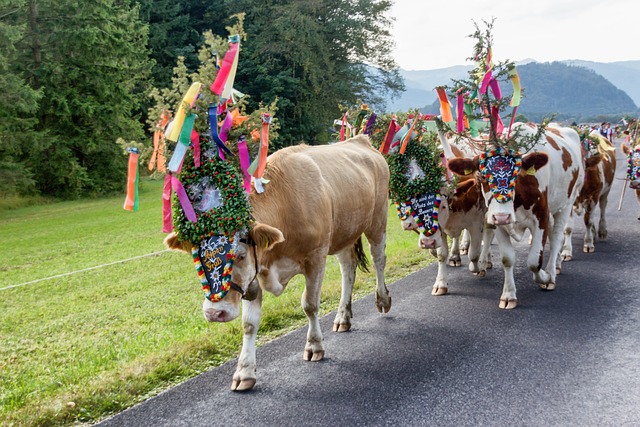
In the Alpine regions, the Almabtrieb (Bavarian) or Viehscheid (Allgäu) refer to the drive of cattle from the mountain pastures into the valley, where they spend the winter in the farm stables. Depending on the regional climate, the cattle drive takes place between mid-September and mid-October and is often accompanied by festive customs.

The Viehscheid in Immenstadt is considered the only urban alpine cattle drive in Germany.  Musical entertainment is provided all day, and there is food and drinks to be enjoyed. In the afternoon, the Scheidschellenwürfeln takes place. 
The Almabtrieb über den Köningsee is also a highlight.

Harvest festivals

Harvest festivals, or Erntedankfest, are an annual celebration to give thanks to God for the gifts of the harvest. On this Thanksgiving Sunday, churches are decorated and the steps in front of the altar are decorated with the gifts of nature. In some places, there are processions with colourfully decorated floats and music.
It is always on the first Sunday in October.

Ritterspiele

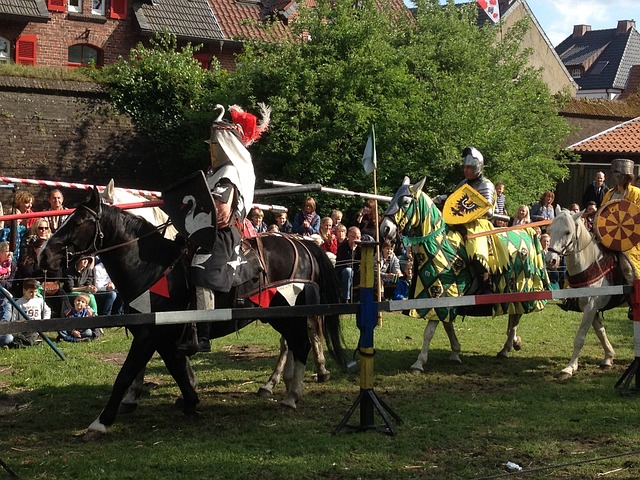
Ritterspiele, often referred to as jousting games or tournaments, are a highly skilled and immensely entertaining art form that has its roots firmly planted in the rich traditions of the European Middle Ages. It is a fascinating sport that has gained immense popularity and has since evolved into both an art form and a mode of entertainment, captivating audiences worldwide. The event often features highly skilled and well-trained knights, battling it out on horseback while using lances to strike their opponents with the objective of knocking them off their horses. The Ritterspiele events are characterised by intricate costumes, beautifully designed shields, and awe-inspiring armour that speak to the grandeur of the medieval era. It is a perfect representation of a bygone era, one that brings to life a time when courage, chivalry, and honour were the watchwords of the day.
The following websites list Medieval events:

Volksfest

A Volksfest is more than just a festival; it is a deeply-rooted cultural tradition that has been observed and celebrated for many years. This type of festival is typically held in towns and cities around the country, where locals and tourists alike come together to enjoy various activities and attractions.

One of the main features of a Volksfest is the traditional costumes that many people wear. These costumes vary depending on the region, but often include items like lederhosen for men and dirndls for women. Along with the costumes, there is plenty of delicious food to enjoy, including classic local dishes like schnitzel and sausages.

Of course, no Volksfest would be complete without beer and music, and both are in abundant supply at these events. Visitors can enjoy live music performances, dancing, and perhaps even a sing-along or two. To top it all off, there is often a funfair with rides and games, making a Volksfest an unforgettable experience.

Christmas Markets

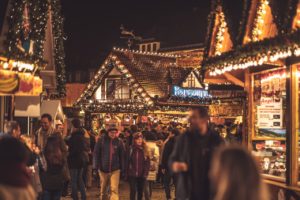
German Christmas markets are truly a magical and delightful experience that everyone should visit at least once in their lifetime. These markets are not just marketplaces, they are cultural events that showcase the best of German traditions and hospitality.
Each market is unique in its own way, some are vibrant and lively, while others are cosy and intimate, but all of them are filled with the smells of gingerbread and roasted nuts, twinkling lights, and cheerful carolers. Visitors can shop for handcrafted ornaments, toys, and gifts, or try traditional foods such as sausages, mulled wine, and stollen cake.
Every stall offers a glimpse into the country’s history and culture, and the festive atmosphere is contagious. From the largest markets in Berlin and Munich to the smaller markets in cosy towns, German Christmas markets are a once-in-a-lifetime experience and should definitely be added to any traveller’s bucket list.

German Christmas Traditions

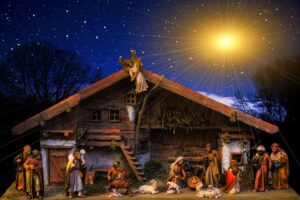
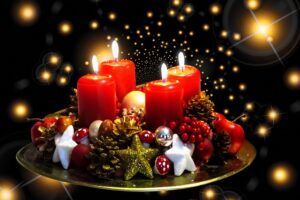
A German Christmas: Where Old Traditions Light the Winter Step into a season woven from candle-glow, evergreen scent, and stories whispered through centuries. From the gentle footsteps of St. Nicholas to the quiet hope of Advent Sundays… from markets that sparkle like fairy-tale towns to Christmas trees dressed in timeless

Christmas Markets

Christmas Markets Visiting Christmas markets in Germany is a delightful way of celebrating the festive season. The heavy scent of sweets, fried sausage and warm wine welcomes you to a variety of Christmas delicacies. If you’re feeling a little chilly, grab a warm mug of Glühwein and catch up with friends.

Christmas

Christmas Christmas in Germany isn’t just a date on the calendar — it’s a whole season steeped in rhythm, ritual, and the comforting glow of tradition.From the first Advent candle to the quiet reverence of Heilige Drei Könige on the 6th of January, the country moves through December with a

Facebook
Twitter
LinkedIn
WhatsApp
Email