Skip to content

Residence permits in Germany

A Visa allows you to enter Germany and stay for no more than 90 days in a 180-day cycle.
When you want to stay in Germany for longer than 90 days, you will need to apply for the correct visa in your home country and, once you are in Germany, apply for the subsequent residence permit (Aufenhaltstitel) at the competent Aliens Authority in Germany.
 

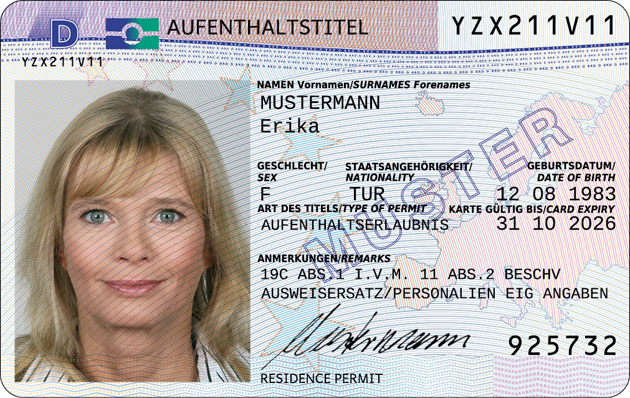
There are two main types of residence permits in Germany

1.Temporary residence permit (Aufenthaltserlaubnis) 

This is always the first residence permit issued in Germany.
It is granted for a limited period and tied to a specific purpose, such as work, studies, family reunification, or self-employment.
You can only apply for permanent residence once certain legal requirements have been met.

Temp Aufenthalt

Temporary Residence

Temporary Residence A Visa allows you to enter Germany, but your stay is limited to no more than 90 days in a 180-day cycle.If you want to stay in Germany for longer than 90 days, you will need to apply for the correct visa in your home country. Once in Germany, you must apply for the subsequent residence permit (Aufenhaltstitel) at the

Read More »

2. Permanent residence permit 

This may be granted in the form of a Settlement permit (Niederlassungserlaubnis) or a Permanent EU residence permit.
A settlement permit allows you to live and work in Germany without time limits and usually without employment restrictions.
The minimum requirements typically include holding a temporary residence permit for several years, having a secure livelihood,
and demonstrating sufficient knowledge of the German language.

Permanent Residence

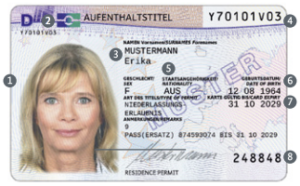
Permanent Residence A permanent residence in Germany is called a Niederlassungserlaubnis and may be granted as a Settlement permit or Permanent EC residence permit. Very important!! Your residence card has an expiration date that corresponds to your passport. Your residence card is linked to your passport number see the PASS field. See the remarks section on the card as well as nr. 7

Read More »

Residence Card

Proof of residence in Germany is issued in the form of a physical electronic card (eAT – electronic residence permit). 
Important to know: the validity printed on the card is not always the same as the validity of your residence status.

For permanent residence permits (such as the Niederlassungserlaubnis), the residence right itself is unlimited. However, the card is usually only issued until the expiry date of your passport. When you receive a new passport, the electronic residence card must be renewed, even though your permanent residence status remains unchanged.
For temporary residence permits (Aufenthaltserlaubnis), the validity of the card depends on the type of residence permit granted (for example, work, studies, or family reunification) and is usually limited to the approved period. In these cases, both the residence status and the card itself are time-limited.

You can read more about what the electronic residence permit looks like, what information it contains, and how to use it on the BAMF website.

Temporary proof of German Residence (Fiktionsbescheinigung)

A Fiktionsbescheinigung is temporary proof of your residence status.
Due to circumstances, it can take longer than expected to receive your residence permit card. 
If you need proof of residence, for example, to travel, you can request a fictional certificate or Fiktionsbescheinigung at the Ausländerbehörde, which they can issue immediately.

Temporary proof of German Residence

Temporary proof of German Residence To stay in Germany longer than 90 days in a 180 period, you will need a residence permit. Qualifying for a residence permit will depend, among other things, on the type of visa you applied for. Your long-stay visa allows you to travel to Germany. Within two weeks after arrival in Germany, you need to

Read More »

Applying for residence

Applying for a residence permit in Germany involves a few essential steps — and the order matters. From registering your address (Anmeldung) to booking an appointment at the Ausländerbehörde and preparing the correct documents, the process can feel overwhelming at first. The post below walks you through what to do, when to do it, and what to expect, so you can avoid common delays and start your life in Germany on solid footing.

Applying for residence

Applying for residence in Germany A visa allows you to enter Germany, but if your stay will exceed 90 days, you’ll need to take the next step and apply for a residence permit (Aufenthaltserlaubnis).Most long-term stays begin with a national visa (Type D), usually valid for 90 days. Within that time, you’re expected to transition to a residence permit that

Read More »

EU - single permit for third-country nationals

The EU Single Permit Directive is about making life simpler and fairer for non-EU citizens who work in the EU
Instead of needing one permit to live and another to work, the directive says:
👉 One application, one permit, both rights.

EU – single permit for third-country nationals

EU – single permit for third-country nationals If you are a non-EU national living and working in Germany, you may come across references to theEU “Single Permit”. This page explains what it is, how it applies in Germany, and what it means for your right to live and work here. The EU Single Permit Directive is about making life simpler and

Read More »

Related content

Checklist after arriving in Germany

Checklist after arriving in Germany Your first days in Germany can feel like landing in a country that speaks fluent paperwork. Forms, appointments, rules, deadlines — all at once. What you need to do depends on why you’re here: a student’s checklist looks different from someone arriving for work, family reunification, or retirement. That said, some things apply to everyone. This page brings together the essential steps most newcomers need to take, in roughly the order that makes life easier. Before you set foot on German soil, do a little homework. Germany runs on rules, rhythms, and quiet expectations—and

List of Long Stay Visas

Long term visas Long-term visas apply to stays in Germany of more than 90 days and are typically issued for purposes such as work or study. If your application is approved, you will receive a visa allowing you to enter Germany. After arrival, you must apply for your residence permit at your local Ausländerbehörde as soon as possible. Your first point of reference is always the official channels: German Embassy in South Africa, long-term visas  Federal Foreign Office Consular Portal Make it in Germany Website Disclaimer – The legal references and section numbers of the German Residence Act (AufenthG)

Ways of obtaining German citizenship

Ways of obtaining German citizenship Please note: The information provided on this page regarding German citizenship is intended for general informational purposes only. While we strive to ensure the accuracy of the content, it is important to note that laws and regulations can change. We strongly recommend consulting with a legal professional or the appropriate authorities (such as the German embassy, consulate, or local immigration office) for the most up-to-date and personalized advice. The South Africans in Germany website is not responsible for any actions taken based on the information presented here. Table of Contents Pathways to German Citizenship

Facebook
Twitter
LinkedIn
WhatsApp
Email