Chad Joubert – Wealth Advisor
DIE GUTE WAHL – THE GOOD CHOICE – Agency for Allfinanz Deutsche Vermögensberatung. We are here for you, we provide you with professional support in your planning for the future: With the right concept, you
We are not financial advisors, and can therefore not give any financial advice. We can however give you some guidelines about the industry in Germany and also some tips on finding a good consultant.
Here is some basic information you need when you want to use the services of a financial or wealth advisor.
| German Term | English Term | Description |
|---|---|---|
| Ausschließlichkeitsvermittler | Exclusive Advisor | The offer a limited product portfolio as they are connected to an insurance company and can therefore offer you the products of the respective company in its financial advice. He works on a commission basis and is obliged to the insurance company. It is therefore a bound financial advice and not an independent one. |
| Mehrfachagent | Non-exclusive Advisor | Like the exclusive agent, the multiple agent is dependent on insurance companies. It is advantageous for financial advice that he can draw on the products of several insurance companies and can therefore guarantee a certain degree of comparability. He also works commission-based. |
| Versicherungsmakler | Insurance broker | In contrast to the exclusive broker and the multiple agent, the broker owes the customer “Best Advice”. He is therefore obliged to provide the customer with the best possible value for money on the regular market. He is also obliged to act independently of the insurance company and to keep an eye on all relevant providers. However, the broker also works on the basis of commissions. |
| Honorarberater | Honorary Advisor | So-called honorary consultants are still relatively unknown in Germany in the context of financial consulting. These are often called insurance advisors. They advise customers on the basis of a predetermined fee and are therefore independent of insurance companies and financial institutions. Like an insurance broker, the fee-based consultant is committed to the customer and owes financial advice, taking into account the best possible individual situation. |
| Provisionsberater | Advisor working on commission | they offer their services free of charge but get a commission on the contracts they sign |

DIE GUTE WAHL – THE GOOD CHOICE – Agency for Allfinanz Deutsche Vermögensberatung. We are here for you, we provide you with professional support in your planning for the future: With the right concept, you

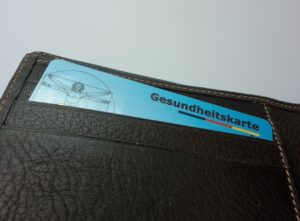
Health Insurance in Germany: A Guide for South Africans In Germany, health insurance (Krankenversicherung) isn’t a choice — it’s a legal requirement for every resident, and a prerequisite for obtaining your Aufenthaltstitel (residence permit).Before you can truly settle in, this is one of the very first boxes you’ll need to tick. When you earn less than the Versicherungspflichtgrenze, you must generally be insured under the public health system (GKV). When your gross income exceeds that threshold — €77,400€ per year in 2026 — you gain the option to choose between public (GKV) and private (PKV) health insurance. See Germanpedia for more information That choice depends on more than just income — your employment status, age, health, and future plans all matter. It’s essential to dig into the fine print of whichever plan you select. Public insurance guarantees basic coverage, but some services — certain dental treatments, some specialist procedures, or private hospital rooms — may only be partly covered (or require additional extras). Private plans often offer broader benefits but may bring higher premiums, co-payments, or restrictions (especially as you age). Always check exactly what your plan covers: from dental and specialist visits to hospital stays and reimbursement rules, you don’t want surprises later. Public Health Insurance (GKV) Public health insurance is the most common option for residents in Germany. Your contributions are linked to your income. Affordable premiums Your contributions are based on your income (up to a certain limit), making it more affordable for those with lower incomes.While the system is fair, the more you earn, the more you pay (up to a maximum threshold). Comprehensive coverage Public health insurance typically covers most basic medical treatments, hospital visits, and prescription medications. Basic dental coverage is generally included. Family coverage If your spouse and children do not have their own income or are low earners, they can be included in your insurance at no additional cost. Network of doctors and hospitals Most doctors and medical facilities in Germany accept public health insurance, giving you broad access to healthcare. Longer waiting times Public health insurance may come with longer waiting times for non-urgent treatments. Limited choice of treatments Some treatments or services may not be covered, or you may have to pay extra for more luxurious treatments or private rooms in hospitals. Private Health Insurance (PKV) Private health insurance offers a more tailored approach to healthcare. Instead of contributions being based on income, private insurance premiums depend on your age, health, and the level of coverage you choose. Faster access to treatment In many cases, private insurance offers shorter waiting times for appointments and treatments. Enhanced coverage You can choose additional benefits, such as private hospital rooms, more specialists, or alternative treatments. Flexibility You can choose from a range of plans that suit your needs, allowing for a more personalized healthcare experience. Potential savings for younger, healthy individuals If you’re young and healthy, private insurance can sometimes be more affordable than public insurance. Higher premiums Private health insurance can be more expensive, especially as you age or if you have pre-existing health conditions. Family coverage costs extra Unlike public insurance, private insurance does not offer free family coverage for low-income earners, meaning you must pay additional premiums for each family member. Premiums can increase with age While the premiums are often lower when you’re younger, they tend to increase as you get older, which can make it expensive in the long run. Limited coverage if you leave If you decide to leave private insurance or return to public insurance, it can be difficult to re-enter, especially if you are over 55. Good to know 01 Switching from private to public insurance can be challenging while transitioning from public to private insurance is relatively straightforward. 02 Public insurance contributions are based on your salary, while private insurance premiums are determined by your risk profile, which includes factors like age and health. As you age, private insurance premiums tend to increase. 03 With private insurance, you usually pay upfront for medical expenses and then claim reimbursement. In contrast, with public insurance, your claims are automatically submitted and paid directly by the insurance provider. 04 Private health insurance is only available to certain groups, such as civil servants, self-employed individuals, students, and employees whose salary exceeds the annual income threshold (Beitragsbemessungsgrenze). In 2025, this threshold is €77.400 gross per year. 05 Many people with GKV choose to purchase supplementary dental insurance to cover the extra costs for things like higher-quality materials (e.g., ceramic crowns) or more extensive treatments like orthodontics. Sozialversicherungsnummer Your health insurance and social security are closely linked. Your Sozialversicherungsnummer (social security number) acts like your ID in the German social system, tracking your contributions to healthcare, pensions, and unemployment insurance. If you’re employed, your employer will handle the registration and link your number to your public health insurance. If you’re self-employed, your social security number may be requested when you sign up for private or public coverage. Either way, you won’t be able to get your Aufenthaltstitel (residence permit) without proof of health insurance, and your social security number ensures your contributions and benefits are correctly recorded. Selbstzahler – use with caution Selbstzahler (self-payer) is not a form of health insurance in Germany, but a payment option sometimes used to access medical care more quickly, especially for a first specialist appointment. Patients pay the doctor’s invoice themselves, usually based on the official private fee schedule (GOÄ). This can be useful to obtain a faster diagnosis or initial assessment, after which follow-up care may continue under statutory insurance (GKV). To avoid being billed privately by default, patients should clearly inform the practice before each follow-up appointment that future visits are to be charged to their Krankenkasse and confirm this again at reception. Patients should explicitly confirm with the practice that future appointments and treatments will be billed to their Krankenkasse. It is important to note that Selbstzahler costs cannot be reimbursed later, and fees can accumulate quickly, so this option

Income Tax / Lohnsteuer We often receive questions about income tax declarations in Germany and where to find help, especially help in English. First, we must clarify that we are not tax consultants and, under German law, are not authorised to provide any tax advice. You can read more about these legal restrictions in this article from Buhl (in German, but easily translatable with most browsers). In simple terms, only your immediate family members are legally allowed to help you with your tax return. If there’s no close family relationship, you’re not allowed to assist someone, even if it’s just a friend. This rule also applies to partners, unless you’re officially engaged or married. For more detailed guidance on who can legally help with tax declarations and under what circumstances, see this article from Steuertipps. Some of the options available to you are: Get a Tax advisor. In Germany, they are called der Steuerberater Get help from a Lohnsteuerhilfeverein – VLH ( A wage tax aid association is a self-help institution run by employees for employees to provide assistance in wage tax matters and in special income tax assessment cases (Section 13 StBerG). They were created in 1964 at the instigation of the trade unions. The legislature aims to ensure that employees can receive tax advice at reasonable costs regardless of their income.) To find one in your area, you can search online or on this website. You can specify your language as well, e.g Englisch or English Do it yourself. You might want to consider using software or apps. The tax rules in Germany are extremely complicated, especially when both partners are working and you have kids.These rules also change yearly, so make sure that if you use software, it is up to date Where to get more information: Deutscher Steuerberater Verband / German Association for Tax advisers Make it in Germany Bundesministerium der Finanzen as well as this page from them Amtliches Lohnsteuer-Handbuch from the Bundesministerium der Finanzen Handbook Germany – The German Tax System Some basic information The German tax year runs from 1 January to 31 December. You can submit your tax return between 1 January and 31 July of the following year. Lohnsteuer and Einkommensteuer refer to income taxes but differ in how they are collected: Lohnsteuer is withheld directly from your salary by your employer and paid to the Finanzamt (tax office). Einkommensteuer is paid directly by the individual — this generally applies if you are self-employed or have additional sources of income. Germany has six income tax classes (“Lohnsteuerklassen“). These determine the rate of tax deduction based on your marital status and household situation. You can view the full list here. It’s also important to note the difference in tax systems between countries. South Africa uses a residence-based tax system, while Germany uses a source-based tax system. This distinction may impact which income is taxable and where. To get a rough estimate of your expected tax deductions, you can use the Wage Tax Calculator from SteuerGo. For official online tax submissions in Germany, you can register for a free account withELSTER (Elektronische Steuererklärung). Please note: the platform is currently only available in German. How and where do I register for Tax As an employee, you will receive your tax ID (Steueridentifikationsnummer), Format: 12 345 678 901, when you register at the Bürgerampt and Auländerbehorde. This is like an Identity number and you will keep it for life. Children born in Germany receive their tax ID at birth. As a freelancer or company, you must register for a tax number (Steuernummer), Format: 12/345/67890 or 3012034567890, that you use on your Invoices.This number is related to your place of residence and if you move to a new town you will need to apply for a new number. Application is done at the Finanzamt. You also apply for a VAT number (Umsatzsteuer-Id), Format: DE123456789, at the Finanzamt. How to Berlin has an excellent article about registering for tax Double Taxation Treaty between South Africa and Germany Agreement between the Federal Republic of Germany and the Republic of South Africa for the Avoidance of Double Taxation with respect to Taxes on Income and on Capital Abkommen zwischen der Bundersrepublik Deutschland un der Republik Südafrika zur Vermeidung der Doppelbesteuerung auf dem Gebiete der Steuern von Einkommen Income Tax Act, 1962 – AGREEMENT BETWEEN THE REPUBLIC OF SOUTH AFRICA AND THE FEDERALREPUBLIC OF GERMANY FOR THE AVOIDANCE OF DOUBLE TAXATION WITHRESPECT TO TAXES ON INCOME From SARS Can double taxation occur? The following is quoted from the SARS Website and was valid at the time of publishing- “Yes, if an individual earns employment income in excess of R1.25 million and the double tax agreement between South Africa and the foreign country, if any, does not provide a sole taxing right to one country, both countries will have a right to tax the income. The portion of the income in excess of R1.25 million may end up being double taxed. Generally, under the provisions of the relevant double tax agreement, if an employee renders services in a foreign country exceeding 183 days, both countries enjoy the right to tax the income. The country of source enjoys the first right to tax the employment income and the country of residence, in our case South Africa, will provide double tax relief in the form of a foreign tax credit to the extent that tax was paid in both countries, subject to limitations.” – More information on the SARS Website Relief from double tax? Keep in mind that depending on your situation, if you are over the R1.25 million threshold, you still can claim tax credits for the taxes paid in Germany. The best thing to do is to speak to your tax consultant. The following was quoted from the SARS website and was valid at the time of publishing. “Section 6quat is the mechanism under South Africa’s domestic law to claim relief from double tax where the amount received for services rendered outside South Africa is subject to tax in South Africa and in

Pensions in Germany The pension system in Germany can be complex, especially for foreigners. Employees, freelancers, and anyone planning for retirement all face different rules and responsibilities. But you don’t have to figure it out alone. Homepage of the Deutsche Rentenversicherung The German state pension scheme provides valuable resources and services to help you navigate retirement planning. Foreign Language Support: Detailed information is available on their homepage for foreign languages. Comprehensive German Resources: For those who understand German, their German site offers even more extensive details. Online Services: To access their online services, ensure your residence card is activated for online use. This activation can usually be done at your local residents’ office (Bürgeramt). For personalised assistance, you can also visit a local Deutsche Rentenversicherung office or contact their helpline. How to apply for a Social Security number? Your Social Security number is used as identification for health insurance (public), pension, long-term care, and unemployment insurance. You can get this number in different ways, depending on your situation. Public Health Insurance – You receive your number automatically when you first sign-up for public health insurance in Germany. If you are on private health insurance, you need to request it manually at your local Rentenversicherung office. Employer – your employer might offer to apply for a social security number for you through their payroll system The German Pension Office – You can personally contact the Deutsche Rentenversicherung, either online or by visiting their offices Your Insurance Broker – As your broker for assistance You can detailed information on the GRV Website(in German) Your social security card (Sozialversicherungsausweis) is a very important document which you must keep safe. You will also need it when applying for social benefits e.g unemployment benefits Statutory Pension / die gesetzliche Rentenversicherung (GRV) The state scheme is financed by a payroll tax known as “social security contributions”.Premiums are deducted by the employer, who normally pays half of the contribution.Those currently paying into the system are funding the current pensioners.Self-employed individuals are allowed to contribute to the GRV.If you have worked and paid contributions in Germany for over 60 months, you will receive a German pension after reaching the official German pensionable age.In addition to the periods of contributory employment, many other periods are considered, including: Child-rearing (until three years of age) Child raising period (up until 10 years of age) Schooling and university after the age of 17 Training periods Times of illness and unemployment (Please register with the Arbeitsagentur if you are unemployed or looking for work, as these will count towards the qualifying periods. Consider doing this as soon as you arrive in Germany and do not have employment yet, for example, spouses. Times caring for relatives “You should clarify your account at an early stage in order to fill in any gaps, such as times spent at school, college or university. Periods of occupational training, pregnancy (incl. Mutterschutz), when you were registered unfit for work or unemployed, are also registered. After clarifying your account, you will have a gap-free “curriculum vitae” in the German compulsory pension insurance system. The earlier you clarify your account, the more “precise” the results of your pension information will be, and this forms the basis for your personal pension plan.” If you worked in Germany for less than 60 months, you are entitled to a refund of your own contributions.The company contributions are forfeited.Early retirement is possible if you are willing to forgo a percentage of your GRV. Pension Points The amount of your pension is primarily based on your insured earnings through contributions. These are converted into pension points. They will credit one pension point to your pension account if you have earned exactly the average income of all insured persons (currently 50,493 EUR) for one year. In addition, pension points can also be credited for certain periods in which no contributions were made (e.g., for vocational school education), or contributions were paid by the state, the employment agency, health insurance, or other institutions (e.g., for military or voluntary service, child-rearing, unemployment, and illness). To calculate the amount of the pension, all pension points are added up and multiplied by the so-called current pension value. The current pension value is 39.32 EUR. (2025)This means that one pension point currently corresponds to a monthly pension of 39.32 EUR. Gaps (Lückenauskunft) We recommend that you complete your insurance account as early as possible.Only with a fully clarified insurance account can they consider all relevant insurance periods when calculating the pensions listed in your pension information. See information above about adding additional periods. Witwe(r) Rente/Pension for your dependents The Deutsche Rentenversicherung pays out a pension to your spouse and children in the event of your death and if certain conditions are met. For more information, visit their website. This article is in English. It is important to note that they distinguish between Kleine and Große Rente. Company pension / betriebliche Altersvorsorge In addition to the German state pension scheme (GRV), many employers offer voluntary company pension schemes (betriebliche Altersvorsorge) to enhance your retirement savings. Key Features of Company Pension Schemes: Employer Contributions: If your company provides a pension scheme, they typically contribute a portion of your savings, helping to grow your retirement fund. Types of Schemes: There are five different company pension options available: Direct Grants (Direktzusage) Support Funds (Unterstützungskassen) Direct Insurance (Direktversicherung) Pension Companies (Pensionskassen) Pension Funds (Pensionsfonds) Tax Benefits: Contributions to these schemes are tax-free up to a specific annual limit, providing immediate financial advantages. What You Should Know: Check with your employer to see if they offer a pension scheme and how it is structured. This additional support can significantly boost your retirement income. Private Pension / private Altersvorsorge Private pension schemes in Germany offer an additional way to save for retirement, providing flexibility and tailored solutions for different individual needs. These schemes are entirely privately funded and managed by the individual, making them independent of employer contributions or the state pension system. Private Providers: In addition to Riester and Rürup plans, many
You must be logged in to post a comment.