Skip to content

Baking ingredients

For all of the passionate bakers out there! We have thoughtfully compiled a comprehensive list of alternative ingredient options that can be used for baking in Germany, along with their corresponding German translations. 

Types of Flour

Product Substitute / Translation
Self-Raising Flour Not commonly sold in Germany (occasionally at Lidl).

Substitute for 1 cup self-raising flour:
– 1 cup (120 g) Type 405 flour (closest to SA cake flour)
– 1½ tsp baking powder
– ¼ tsp salt
Cake Flour Type 405 (Weizenmehl 405) for cakes, pastries, sauces, and lighter baked goods.
Type 550 for muffins, cookies, and white bread.
Rye Flour Type 1150 (Roggenmehl) medium to dark rye.
Type 1800 very dark rye for rustic German breads.
Bread Flour Type 812 German bread flour, slightly higher gluten than plain flour.
White Whole Wheat Type 1600 darker and fuller than US white whole wheat, but closest equivalent in Germany.
Volkoring Meel / Whole Wheat Type 1700 Weizenvollkornmehl, nutty and dense, good for hearty whole wheat breads.
High Gluten Flour Type 1050, good for elastic doughs like rolls, pretzels, and pizza crusts.
Spelt Flour / Dinkel / Hulled Wheat Type 630 Dinkelmehl, can be used in place of Type 405, slightly more gluten and a mild nutty flavour.
Nutty Wheat Nutty Wheat contains about 18% coarse bran (wholemeal has roughly 12%).
DIY version: 4 parts white flour mixed with 1 part wheat bran.
Bran / Semels die Kleie
Wheat Bran die Weizenkleie
Mielieblom / Cornstarch (Maizina) die Speisestärke, sold in the baking aisle.
Substitute: 15 ml cornstarch = 30 ml cake flour.

German starch variations:
Cornstarch = Maisstärke
Potato starch = Kartoffelstärke
Wheat starch = Weizenstärke
All fall under the general name Speisestärke.
Baking Soda / Koeksoda das Natron
Cream of Tartar / Kremetart der Weinstein (pulver)

Tartaric acid = die Weinsäure or der Weinstein (but stronger).
Substitution: 1 teaspoon tartaric acid = 2 teaspoons cream of tartar.
Baking Powder das Backpulver, usually in sachets.

SA baking powder (like Royal) is double-acting.
Many German brands, such as Dr. Oetker Backin, are single-acting and activate once.
Instant Dry Yeast Trockenbackhefe or Instant Hefe, works the same as SA instant yeast.
Vanilla Essence vs Vanilla Extract Vanilla essence = Vanilleessenz (artificial).
Vanilla extract = Vanille Extrakt (natural, stronger).

Substitution:
If a recipe calls for extract, use double the essence.
If a recipe calls for essence, use half the extract.

More information about Baking powder

  • Single-acting baking powder reacts when it’s mixed with the liquid ingredient in a recipe. Because all the bubbles are produced immediately, it’s important to bake the recipe in a preheated oven as soon as it’s mixed. Similarly, over-mixing can drive off the bubbles, making the recipe fall flat. Contains only one acid
  • Double-acting baking powder releases some carbon dioxide immediately and more upon heating. It’s double-acting in that it contains a fast-acting acid that reacts at room temperature and a slow-acting acid that reacts with heat. Most of the carbon dioxide gas is produced during cooking, so double-acting baking powder is more forgiving if a recipe isn’t baked immediately. Contains both fast- and slow-acting acids

Substituting:

Usually, you can substitute one type of baking powder for the other. So, if a recipe calls for 1 teaspoon of double-acting baking powder, you can use 1 teaspoon of single-acting baking powder (and vice versa).
Exception!!
If a recipe calls for double-acting baking powder because there is a time delay between mixing and baking, it’s not a good idea to use single-acting baking powder. Pancakes for example

I found this info on the internet:
To substitute 1 Tsp of Double Acting Baking Soda, use:
1/4 teaspoon baking soda plus 1/2 teaspoon cream of tartar plus 1/4 teaspoon cornstarch
OR 1 1/2 teaspoons single-action baking powder
OR 1/4 teaspoon baking soda plus 1/2 cup (120 ml) buttermilk, sour milk or yoghurt to replace 1/2 cup (120 ml) non-acidic liquid
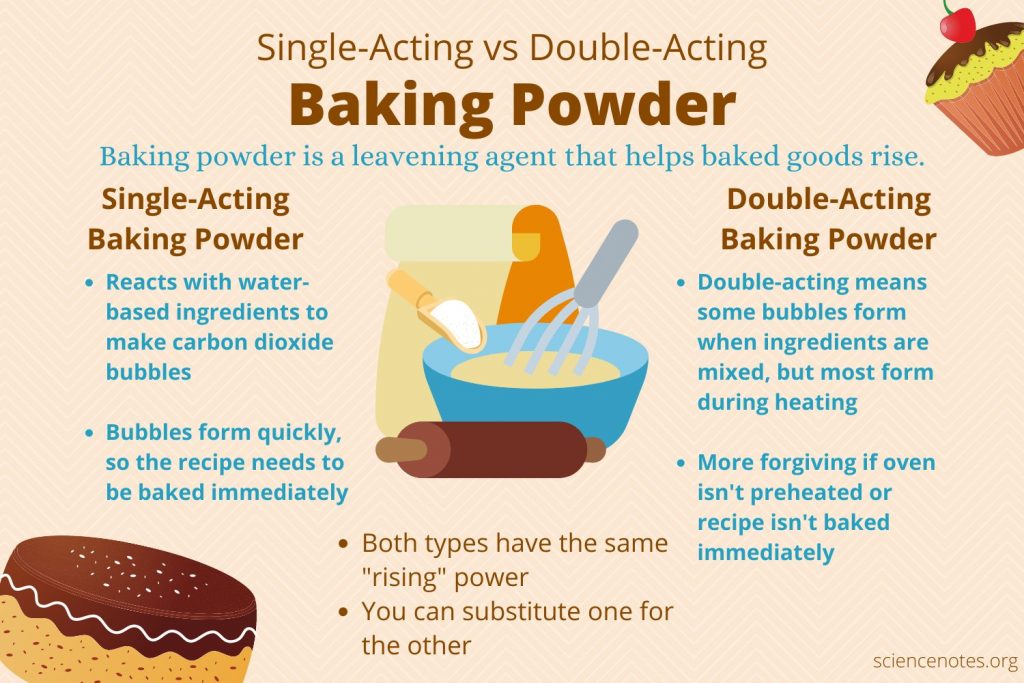
Info from Sciencenotes.org
German Name English Name What It Is Use in Baking Can It Be Substituted?
Natron Bicarbonate of Soda / Baking Soda A pure alkaline (sodium bicarbonate) that requires acid to activate. Used to help baked goods rise when combined with an acidic ingredient (e.g., yogurt, lemon juice, vinegar, buttermilk). Also helps with browning. Not directly interchangeable with Backpulver. If a recipe calls for Natron and you only have Backpulver, adjust acid and quantity carefully. Rule of thumb: 1 tsp Natron = 3 tsp Backpulver (omit acid).
Backpulver Baking Powder A complete leavening agent containing both an acid (like cream of tartar) and a base (bicarbonate of soda), plus a drying agent like starch. Used to make cakes and baked goods rise without needing extra acid in the recipe. Convenient all-in-one option. Can be homemade: 1 part Natron + 2 parts cream of tartar = baking powder. Example: 1 tsp Backpulver = 1/3 tsp Natron + 2/3 tsp cream of tartar.
Reinweinstein / Weinsteinpulver Cream of Tartar An acidic byproduct of winemaking (potassium bitartrate). A white, powdery acid. Stabilises whipped egg whites, prevents sugar crystallisation in syrups and meringues, and can be used to make homemade baking powder. For egg whites, can substitute lemon juice or vinegar. For baking powder, combines with Natron to create leavening power.

Related Content

Meat

🇿🇦 Meat the Difference: A South African’s Guide to Buying Meat in Germany 🇩🇪 Looking for proper boerewors? Wondering why German Rindfleisch doesn’t taste quite like home? Or scratching your head at all the unfamiliar beef cuts? Get to know the difference between German and South African beef cuts, learn the right words at the butcher, and discover where to find quality meat that feels like home. German beef cuts German Cut English Equivalent Notes

Frozen products

Frozen products Finding your favourite South African frozen products in Germany can be a bit like playing grocery store hide-and-seek This guide helps you decode supermarket shelves, discover the German names for your favourites, and find the closest substitutes when the real thing is nowhere to be found. No more guessing at labels or ending up with mystery dough – you’ll shop with confidence and cook with the flavours you love. Your go-to list for

Types of Sugars

Types of Sugar Moving to Germany comes with its quirks, and even something as simple as sugar can surprise you. The soft brown sugar you grew up baking with? Rare. The rock sugar in your tea? Completely new.This guide is your pantry translator — showing you exactly which German sugars match your South African favourites, what they’re called, and how to swap them in your recipes. From Puderzucker to Zuckerhut, you’ll find photos, conversions, and

Dairy substitutes

Dairy substitutes From Schlagsahne to Quark, here’s a handy list of German dairy products, translations, and the best substitutes when your recipe calls for something hard to find. Types of Cream and special milk Product German Equivalent / Local Options Substitute Ideas & Notes Buttermilk Buttermilch For 1 cup buttermilk: add 1 tbsp white vinegar or lemon juice to a measuring cup, then fill with milk to make 1 cup. Stir and let stand for

Facebook
Twitter
LinkedIn
WhatsApp
Email