

Skip to content

Long term visas

Long-term visas apply to stays in Germany of more than 90 days and are typically issued for purposes such as work or study. If your application is approved, you will receive a visa allowing you to enter Germany. After arrival, you must apply for your residence permit at your local Ausländerbehörde as soon as possible.

Your first point of reference is always the official channels:

Disclaimer - The legal references and section numbers of the German Residence Act (AufenthG) provided on this page are intended for general information and orientation only. Immigration law is complex, subject to change, and often applied differently depending on individual circumstances, federal state practices, and the discretion of the competent authorities. In some cases, residence permits may be issued under multiple legal provisions or in conjunction with additional regulations, such as the Employment Regulation (BeschV). This information does not constitute legal advice and should not replace guidance from the German authorities, an immigration lawyer, or an official advisory service. Always consult the responsible German mission or local foreigners authority for binding and up-to-date information regarding your specific situation.

Application

Your first long-stay German visa must always be applied for through the German Embassy in South Africa. This also applies if you later change your purpose of stay, for example, from studying to working. The German Embassy operates from Cape Town and Pretoria.

Many long-term visa applications can now be started online via the Consular Services Portal of the Federal Foreign Office. The portal provides a secure and structured application process, enabling you to complete your visa application online and have it reviewed in advance by the German mission. This helps ensure your application is complete and prepares you for your in-person appointment, where your biometric data (fingerprints and photo) will be collected.

Germany differentiates between academic degrees and vocational or professional qualifications. Degrees from traditional universities (Universität) are generally treated as academic, while qualifications from Universities of Applied Sciences (Hochschule/Fachhochschule) focus on applied, career-specific training.
South African degrees that are considered university-level may, in some cases, be classified as vocational or professional in Germany, which can influence qualification recognition, visa options, and employment eligibility.

List of long-term (Type D) Visas

👪 Family reunification

Family reunification visas allow close family members of people legally living in Germany to join them for a long-term stay.
This category covers spouses or registered life partners, minor children joining a parent, and, in more limited cases, parents joining their children in Germany. Each pathway has its own legal requirements, documentation standards, and eligibility criteria, which are strictly assessed by the German authorities. While the underlying principle is to protect family unity, these visas are not automatic and require careful preparation.
Legal basis: This residence permit is issued in accordance with Sections 27–36 of the German Residence Act (AufenthG), which governs family reunification for spouses, children, and other eligible family members. 

Family Reunification Visa – Your stories

Family Reunification Visa – Your stories These are shared experiences by people who recently went through a Family Reunification Visa application process. You can share yours with us via

Family Reunification Visa

Family Reunification Visa Family reunification in Germany allows close family members to join their relatives living in Germany—whether those relatives are German citizens or third-country nationals with valid residence

Getting married

Getting Married Navigating the process of getting married in Germany can feel overwhelming, especially if you’re not a German citizen. On our Facebook page, we often receive questions about

💼 Employment Visas

Employment visas allow non-EU citizens to live and work in Germany on a long-term basis, provided specific legal and professional requirements are met. These visas are tied to the type of work you intend to do, your qualifications, and in many cases, a concrete job offer or recognised professional background. Germany offers several employment-related visa pathways, ranging from highly qualified roles to skilled trades, creative professions, and regulated occupations. Applications for employment visas are submitted through the official Consular Services Portal, which guides you through the process, outlines eligibility criteria, and helps ensure your application is complete before your embassy appointment.

💼 Blue Card

The Blue Card is designed for highly qualified professionals from non-EU countries who wish to live and work in Germany. It is primarily aimed at applicants with a recognised university degree and a job offer in Germany that meets the required minimum salary threshold. The Blue Card offers a clear pathway to long-term residence and, in many cases, faster access to a permanent settlement permit.

Legal basis: The EU Blue Card is issued in accordance with Section 18g of the German Residence Act (AufenthG), regulating residence for highly qualified employment.
Additional background information is available on Make it in Germany

💼 General Employment Visas

If you do not meet the requirements for an EU Blue Card, Germany offers a range of general employment visas for qualified professionals. These visas cover skilled workers with university degrees or vocational qualifications, IT specialists, researchers, and specific employment situations such as partial recognition of qualifications or intra-company transfers. The exact visa type depends on your qualifications, professional experience, and the nature of the job offer in Germany.

The main entry point for this category is the Employment Visa, under which the following subcategories fall:

💼 Highly Skilled worker holding a university degree

This visa category is intended for highly skilled workers with a recognised university degree who wish to take up employment in Germany.
Skilled workers from non-EU countries may qualify if their academic qualification is recognised in Germany or considered comparable to a German degree, and if they have a concrete job offer or employment contract with a German employer. 
Legal basis: This residence permit is issued under Section 18b (1) of the German Residence Act (AufenthG) for skilled workers holding a recognised university degree.

💼 Skilled Worker with relevant experience

This visa category is designed for skilled workers with relevant professional experience who wish to take up employment in Germany, even if they do not hold a formal German-recognised vocational qualification.
Applicants from non-EU countries may qualify if they can demonstrate a recognised foreign degree or at least two years of formal training (this requirement does not apply to IT professionals), as well as at least two years of relevant work experience gained within the last five years.
A binding job offer from a German employer is required, with a minimum annual gross salary threshold that must be met. 

💼 Partial recognition of vocational training

Work visa in the case of partial recognition of vocational training. This visa category is intended for prospective skilled workers whose foreign professional qualifications cannot be fully assessed through the standard recognition procedure, often due to missing or incomplete documentation.
In such cases, the competent German recognition body may require a qualification analysis to formally assess your professional knowledge and skills. If approved, you can apply for a national visa to enter Germany specifically for this purpose, either online via the Consular Services Portal or through the responsible German mission abroad.
The visa is issued for a maximum of six months and allows you to complete the qualification analysis in Germany.
Applicants must have an official decision and invitation from the recognition body, as well as generally German language skills at A2 level.
Legal basis: This residence permit is issued under Section 16d of the German Residence Act (AufenthG) for the purpose of conducting a qualification or skills analysis.

💼 Freelance or Self employment

Are you considering self-employment in Germany? Germany offers a specific residence permit for entrepreneurs, freelancers, and other self-employed professionals who wish to establish or continue their business activities in the country. The requirements vary depending on your business model, professional background, and economic interest in Germany.
Legal basis: This residence permit is issued under Section 21 of the German Residence Act (AufenthG) for self-employed and freelance activities
You can find comprehensive and up-to-date information on eligibility criteria, required documents, and the application process for self-employment visas
here.

💼 Skilled Worker with qualification

 This visa category is for skilled workers with completed professional or vocational training who wish to take up employment in Germany. Applicants from non-EU countries may qualify if their professional qualification is recognised in Germany as equivalent to German vocational training and they have a concrete job offer or employment contract with a German employer.
This includes jobs in IT, without holding a university degree. You can consult the current professions in demand. 
Legal basis: This residence permit is issued in accordance with Section 18a of the German Residence Act (AufenthG) for skilled workers with recognised vocational qualifications.

💼 Placement agreement

This visa category applies to skilled workers entering Germany under a formal placement agreement between the German Federal Employment Agency and a foreign employment service. In these specific cases, it is possible to take up qualified employment in Germany before full recognition of a professional qualification is completed.
Applicants must already have approval from the Federal Employment Agency, a binding job offer appropriate to their qualifications, and generally German language skills at A2 level.

💼 Intra-corporate transfer (ICT)

Intra-corporate transfer (ICT).Non-EU nationals employed by a company outside the European Union can be temporarily transferred to a branch, subsidiary, or affiliate in Germany under the intra-corporate transfer scheme.
This is regulated by the EU Directive on ICT and implemented in German law, and is intended for managers, specialists, or trainees within the same company group. 
Legal basis: This residence permit is issued in accordance with Section 19c (1) of the German Residence Act (AufenthG) for employment in specific shortage or regulated occupations. Official flyer from BAMF

💼 Jobseeker Visa (Chancenkarte)

This residence permit, also known as the Opportunity Card (Chancenkarte), allows workers from non-EU countries to enter Germany in order to look for employment or explore options to have foreign professional qualifications recognised.
Eligibility is determined either through a points-based system, where a minimum of six points is required based on qualifications, language skills, work experience, age, and other factors, or directly as a skilled worker if you already hold a vocational qualification or university degree obtained or recognised in Germany. In all cases, applicants must meet basic requirements, including proof of sufficient financial means for the duration of their stay. Issued for up to one year, with the option to switch to a residence permit for employment if a qualifying job offer is secured while in Germany.
Legal basis: The Opportunity Card is issued in accordance with Section 20a of the German Residence Act (AufenthG) for the purpose of seeking qualified employment.

More information on the German Embassy website

Jobseekers visa (Chancenkarte)

Chancenkarte Germany, with its robust economy, rich cultural heritage, and world-renowned education system, has become an increasingly attractive destination for professionals from around the globe. For South Africans seeking to build a new life in Europe, the Chancenkarte, or “Opportunity Card,” offers a promising pathway What is the Chancenkarte? The

Working in Germany

Working in Germany Everything you need to know about finding work in Germany, what your resume must look like,  recognition of studies, vocational careers, medical, pension and taxes. When it comes to working in Germany, one must be aware of the various types of employment visas available. These visas can

Intra corporate transfers (ICT card)

Intra corporate transfers (ICT card) The ICT Card (Intra-Corporate Transfer Card) is a residence permit designed for non-EU nationals who are temporarily transferred within a multinational company to a branch or affiliate in Germany. This visa is aimed at managers, specialists, and trainee employees who are part of a business

Freelancing in Germany

You can set up your own business in two ways, one is to work as a freelancer or as a self-employed entrepreneur (Gewerbe).  If you want to work as a freelancer in Germany, you will need to apply for a Residence permit for the purpose of freelance employment. Freelance occupations

💼 Artists

Germany offers a specific visa pathway for people working in the creative and cultural sectors, including musicians, performers, visual artists, designers, and other artistic professionals. This visa allows you to take up employment or freelance work as an artist, provided you can demonstrate your professional activity, relevant qualifications or experience, and a viable source of income in Germany. Depending on your situation, this may include contracts, invitations, or proof of planned artistic projects. You can apply for a visa to work as an artist, either through the Consular Services Portal or at the responsible German mission abroad.

💼 Language Teachers

Under certain conditions, foreign nationals may be granted access to the German labour market as language teachers. Depending on your qualifications and the nature of your work, you may be employed by a school or educational institution, or work independently as a freelancer. Requirements typically include appropriate teaching qualifications, relevant experience, and proof of planned employment or teaching engagements in Germany. Further details on eligibility and application requirements are available on the Make it in Germany
website.

💼 Professional Drivers

Germany has a strong demand for qualified professional drivers, particularly drivers of heavy goods vehicles (HGV) and buses. This visa category is intended for experienced drivers who have the required professional qualifications, driving licences, and, where applicable, recognised certificates of competence. Applicants must usually have a concrete job offer from a German employer and meet additional requirements such as language skills and professional recognition. As a professional
driver, you have a good chance of finding suitable employment in Germany and applying for a corresponding residence permit to take up work.

💼 Professional athletes and coaches

The German labour market is also open to professional athletes and coaches from abroad. This visa category applies to individuals who can demonstrate professional-level sporting experience and a concrete engagement with a German club, association, or employer. Applicants must generally provide evidence of their sporting career, qualifications, and the terms of their contract in Germany. Further information on requirements and application procedures for professional
athletes
and coaches can be found on the Make it in Germany website.

🎓 Study and learning

🎓 Vocational Training (Ausbildung)

Germany offers a residence permit for basic or advanced vocational training, as well as for seeking a vocational training place. Basic vocational training may be school-based or in-company and leads to a state-recognised qualification, with approval from the Federal Employment Agency usually required for in-company training.
Applications generally begin with a national visa, which can be submitted online via the Consular Services Portal or through the responsible German mission. Visas for vocational training are typically issued for one year, while visas to seek a training place allow a stay of up to nine months.
Depending on the pathway, applicants must meet requirements relating to training contracts or school qualifications, German language skills (usually at B1 level), age limits when seeking a training place, and proof of sufficient financial means.
Legal basis: This residence permit is issued in accordance with Section 16a of the German Residence Act (AufenthG) for vocational training purposes.

For more information, visit the German Embassy Website or the online portal

Vocational Careers

Vocational Careers Plumbers, nurses, electricians, hairdressers, and countless other trades are in high demand across Germany. The New Skilled Immigration Act opens doors for experienced South Africans to live and work here — legally, confidently, and with purpose. New from March 2024 Residence for professional recognition: Those participating in refresher training or

The German Vocational Training System

Vocational Training in Germany An Ausbildung is Germany’s structured vocational training system. It combines theory and practice: learners attend a school and work in a real company at the same time. You don’t just learn a job — you become the job, step by step. Most Ausbildung programmes start in

🎓 Study and University Preparation

Germany offers a residence permit for those wishing to commence studies or seek a university place. This visa category also covers preparatory pathways, including language courses required for admission, attendance at a preparatory college (Studienkolleg) or comparable institution, and compulsory internships. Applications usually begin with a national visa, which can be submitted online via the Consular Services Portal or through the responsible German mission abroad. Visas for study purposes are typically issued for up to one year, while visas to seek a university place allow a stay of up to nine months. Depending on the pathway, applicants must provide proof of admission or school-leaving qualifications, sufficient language skills for the intended programme, and evidence of adequate financial means for the duration of their stay.
Legal basis: This residence permit is issued under Section 16b of the German Residence Act (AufenthG) for the purpose of studying in Germany.
Legal basis: This residence permit is issued in accordance with Section 17 of the German Residence Act (AufenthG) for the purpose of seeking a university place. More information can be found on the German Embassy website and the online portal

To sponsor someone’s visit, for example, your adult child who wants to study in Germany and does not qualify for the financial requirements, you need to apply for a Verpflichtungserklärung

Study in Germany

Studying in Germany Germany’s higher education landscape is renowned for its academic excellence and affordability. Whether you’re pursuing a degree at a Universität, a Fachhochschule (University of Applied Sciences), or through a dual study program, you’ll find a learning culture built on precision, independence, and real-world application. Before applying, it’s

Recognition of studies

Recognition of studies Planning to study further, work in a regulated profession, or have your vocational training acknowledged in Germany?You may need your Matric (Grade 12), South African degree, or other qualifications officially recognised, depending on your goals. To check whether your profession is regulated in the EU, explore the

Verpflichtungserklärung – Sponsoring someone’s visit

Verpflichtungserklärung – Sponsoring someone’s visit One of the key requirements for both short-term and long-term (National) Schengen visas is proof of financial means. If you’re inviting someone to visit you, like your parents or other family members, and they’re unable to show they can support themselves financially during their stay,

🎓 Language Course

You can obtain a national visa to enter Germany for the purpose of attending an intensive German language course if you are a non-EU citizen and plan to stay for more than 90 days. This visa is designed for full-time language learning and is usually issued for the duration of the course, up to a maximum of 12 months.
To qualify, you must be enrolled in an intensive language programme that typically includes at least 18 teaching hours per week, and you must provide proof of admission, sufficient financial means, health insurance, and accommodation arrangements. During your stay on a language course visa, you may be permitted to work part-time (up to 20 hours per week) alongside your studies. 
Legal basis: This residence permit is issued under Section 16f of the German Residence Act (AufenthG) for participation in a German language course.

Study German in Germany

Study German in Germany You can apply to study German in Germany. For this, you need to apply for a Long Term Visa National Visa. Take note that the procedure is different from that of a tourist visa.  Application Process Enrol at an accredited German language school Prepare your proof of financial means Book your Appointment for a long-term Visa.  Take out health insurance Have your biometric passport photos taken Prepare your documentation, and make sure you have

🌍 Other long-term visas

🌍 Au Pair Visa

An Au Pair visa allows young adults from non-EU countries to live with a host family in Germany for a limited period while helping with childcare and light household tasks. In return, au pairs receive accommodation, meals, pocket money, and the opportunity to improve their German language skills and experience everyday life in Germany. To qualify, applicants must usually be between 18 and 26 years old, have a basic knowledge of German (generally at least A1 level), and hold a formal au pair contract with a host family in Germany. The visa is typically issued for up to one year and does not allow full employment.
Legal basis: This residence permit is issued under Section 16b (8) of the German Residence Act (AufenthG) for au pair stays. Also see Section 12 of the Ordinance on the Employment of Foreigners.  More information on the German Embassy Website

Aupair in Germany

Au Pair in Germany An au pair is by definition a young foreign person, typically a woman, who helps with childcare and childcare-related housework in exchange for food, a room and some pocket money.  The aim of being an Au Pair is to improve their language skills and get to know the culture of the host country. There are many benefits to working as an Au Pair. The opportunity to explore Germany. Experience the German culture. A great way to improve your German language skills.  Need Help or Support? These

🌍 Visa for research

According to Section 18d of the German Residence Act (AufenthG), non-EU nationals may apply for a visa for research purposes in Germany. This residence permit is intended for researchers who have a hosting agreement or employment contract with a recognised German research institution, university, or research organisation. It allows researchers to carry out scientific work or research projects in Germany for the duration of their appointment. 
Applicants must usually provide proof of their academic qualifications, a valid hosting agreement or contract, and evidence that their livelihood and health insurance are secured for the duration of their stay. The visa is applied for before entry to Germany, either online via the Consular Services Portal or through the responsible German mission abroad, and can later be converted into a residence permit after arrival.
Legal basis: This residence permit is issued under Section 18d of the German Residence Act (AufenthG) for research purposes.
Further details on eligibility requirements and the application process are available on the Make it in Germany website.

🌍 Volunteering

Volunteering in Germany is possible for non-EU nationals through a specific residence permit designed for voluntary service programmes. This typically applies to recognised schemes such as the Federal Voluntary Service (Bundesfreiwilligendienst), the Voluntary Social Year (FSJ), the Voluntary Ecological Year (FÖJ), or comparable, officially recognised programmes. To qualify, you must have a confirmed placement with an approved organisation in Germany, and your subsistence and health insurance must be secured for the duration of your stay. The residence permit is usually issued for the length of the voluntary service and does not allow regular paid employment outside the programme.
Legal basis: This residence permit is issued under Section 16b (8) of the German Residence Act t (AufenthG) for participation in recognised voluntary service programmes.  More information on the German embassy website

Volunteering

Volunteering People from 3rd world countries can apply to do volunteer service in Germany. There are four types of Voluntary services in Germany that you can apply for, they are: Federal Voluntary Service (BFD), Voluntary Social Year (FSJ), Voluntary Ecological Year (FÖJ), European Voluntary Service (EVS) Before you can apply for a visa, you will need a Contract/Arrangement for your voluntary service in Germany. Also, take note of the following as specified on the German Embassy

Helpful visa application guidance & practical resources

Applying for a German visa often involves more than just meeting the formal requirements. Preparation, documentation, and understanding what the authorities are looking for can make a significant difference to the outcome of your application. In this section, you’ll find practical visa application tips to help you avoid common mistakes, as well as guidance on the Verpflichtungserklärung (formal declaration of commitment), which may be required if someone in Germany is sponsoring part or all of your stay. 

  • South African citizens need a visa to travel to Germany and a residence permit to stay longer than 90 days
  • A visa allows you to enter the country. You apply for your visa at the German Embassy in South Africa. You must apply for the correct long-stay visa, which is linked to the residence permit you will apply for once you are in Germany.
  • You do not need an agency or immigration lawyer to assist you.
  • The embassy in South Africa is extremely helpful. If you have all your paperwork in order, the process should go well. Their website is very informative.
  • You are not allowed to work in Germany if it is not explicitly stated on your residence permit
Visa application tips

Schengen Visa application tips We are not immigration agents, and your first point of contact should always be the German embassy or consulate in South Africa.Most of the information you need to apply for your visa at the Germany Embassy in South Africa can be found on their websiteHere is

Arriving in Germany

Arriving in Germany Arrived in Germany. Now what?Moving countries is exciting, but let’s be honest, it can also feel like stepping into a maze of paperwork, systems, and unfamiliar rules. This space is here to guide you through those first crucial steps: from getting registered and understanding residence permits, to

Verpflichtungserklärung – Sponsoring someone’s visit

Verpflichtungserklärung – Sponsoring someone’s visit One of the key requirements for both short-term and long-term (National) Schengen visas is proof of financial means. If you’re inviting someone to visit you, like your parents or other family members, and they’re unable to show they can support themselves financially during their stay,

Hotline Working and Living in Germany

The  BAMF (Federal Office for Migration) hotline offers personalised information and advice, in German or English, on the following topics:

  • Job search,
  • Work and careers
  • Recognition of foreign vocational qualifications
  • Entry and residence
  • Learning German

The hotline is available from 9:00 a.m. to 4:00 p.m. CET, Monday through Friday,

Website

Visit the BAMF website for more information. There is an option to contact them via an online form on their website

Hotline

+49 3018151111

Legal basis
Resources on the web
Terminology
English Term German Term
Permanent Residence Permit Die Niederlassungserlaubnis
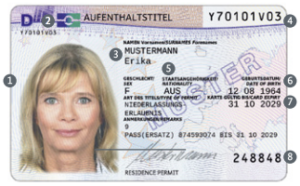
Residence Permit Der Aufenthaltstitel
Visa Das Visum
Blue Card Die Blaue Karte
Related content
Finding a place to stay

Finding a place to rent Finding a place to rent in Germany is a lot like going for a job interview — you need to sell yourself, make a great impression, and show that you’re reliable.The key? Go in prepared, paperwork in hand, and confidence on your face. Documents needed

Learning German

Master the Language. Embrace the Culture. Embarking on the journey to learn German can be approached in various ways to suit your lifestyle and goals. Online platforms offer the convenience of flexible language courses, while mobile apps make learning easy wherever you are. For a more interactive experience, attending in-person

Moving to Germany

Moving to a new country can be both exciting and overwhelming at the same time. The thought of starting a new chapter in your life can bring a sense of thrill, while the idea of going through the process of moving can be daunting. Countless things need to be taken

Residence Permits in Germany (Aufenthaltstitel)

Residence permits in Germany A Visa allows you to enter Germany and stay for no more than 90 days in a 180-day cycle.When you want to stay in Germany for longer than 90 days, you will need to apply for the correct visa in your home country and, once you

Checklist before you travel to Germany

Checklist before you travel to Germany Before embarking on your journey to Germany, it is crucial to be aware of all the administrative tasks that will require your attention. While this list is not solely focused on moving tasks, it serves as a comprehensive guide to all the essential administrative
Good to know

Good to know Your Visas are approved, your paperwork is finalised and you are ready to start planning the big move. This can be a very stressful time, and we hope the information we provide here helps to ease the process. Cost of living In general, properties are more expensive

Facebook
Twitter
LinkedIn
WhatsApp
Email