Skip to content

Easter in Germany is an joyous holiday that is celebrated with great enthusiasm and a range of traditions that have been passed down through generations. Colourful Easter eggs, traditional bonfires, and a wide variety of delicious foods are just a small part of what makes this festive occasion so special. Whether it’s by decorating Easter trees or baking Easter cakes, Germans embrace this holiday with open arms. Additionally, the holiday is marked by a plethora of events and activities, such as Easter markets, parades, and church services.

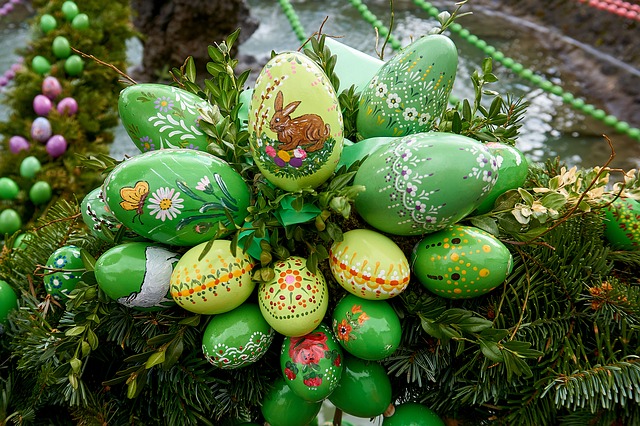
During the Easter season in Germany, streets and homes are decorated with colourful ornaments, most notably with decorated eggs, symbolizing new life and resurrection. German craftsman producing and selling painted Easter eggs is a common sight in many German towns and villages.

German churches hold special services during holy week and on Easter Sunday. Many church choirs will perform oratorios of Johann Sebastian Bach during their Easter service. Protestant churches usually hold sunrise services on Easter Sunday as an acknowledgement of the Resurrection. 

What is celebrated during Easter

Christians celebrate the resurrection of Jesus at Easter. According to Christian belief, Jesus was crucified on Good Friday and rose again on Easter Sunday. For Christianity, Easter is the most important festival of the year.
Easter Sunday is actually the culmination of a series of traditional observations that start with Karneval or Fasching and the following Ash Wednesday (Aschermittwoch). After that, the holidays (“holy days”) of Palm Sunday and Good Friday lead up to Easter.

Important dates for 2024

HolidayDateInformation
Palm Sunday / Palmsonntag13 April 2025The Sunday before Easter. The feast commemorates
Jesus’ triumphal entry into Jerusalem. It is also the start of the Holy week or Karwoche
Maudy Thursday / Gründonnerstag17 April 2025Maundy Thursday or Holy Thursday is the day during Holy Week that commemorates the Washing of the Feet and Last Supper of Jesus Christ with the Apostles, as described in the canonical gospels
Good Friday / Karfreitag18 April 2025Karfreitag
Karsamstag19 April 2025
More info
Easter Sunday / Ostersonntag20 April 2025Ostersonntag
Easter Monday21 April 2025

Other Easter Foods

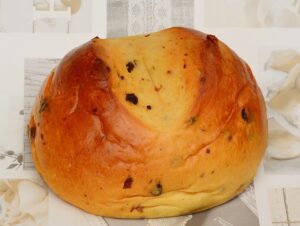
Delicious Hefezopf, Hefekranz and  Easter bread (das Osterbrot) in most bakeries. Made with yeast dough, raisins and almonds. Eaten with butter. There is some great recipes available on Chefkoch.

The closest you find to Hot Cross buns are Rosinenbrotchen
Brightly coloured boiled eggs and of course beautiful chocolate easter eggs can be bought at bakeries.

South African Easter Recipes

Easter Recipes

South African Easter Recipes Here is a collection of Traditional South African Easter Recipes. To submit your own recipes to be published on this website, please use this form Roast Lamb Here is a delicious selection of mouth-watering Roast Lamb Recipes that are sure to impress your guests. Pickled Fish Traditional Pickled Fish recipe For the hake:2kg fresh hakeFlour for dustingOil for frying For the sauce:2Tbs paprika2Tbs garam masala1Tbs turmeric1Tbs smoked paprika2 fresh chilies, chopped2 cloves garlic, crushed2 onions, chopped100ml White spirit vinegar3Tbs Brown sugarCup of water Method Start by preparing the hake. Place a saucepan on high heat with a good coating of oil. While it heats, lightly dust the hake pieces in flour and gently shake off any excess flour. Drop the pieces into the oil and fry until golden. Remove once golden in colour and set aside. Next, prepare the sauce. Start by putting a pan over a medium heat with a dash of oil, and fry the onions, garlic, and chilli in a pan until caramelised. Add the paprika, smoked paprika, masala, and turmeric and fry for 5 minutes until fragrant. Sprinkle in the brown sugar and stir until it’s dissolved. Finally, deglaze the pan with the water and vinegar and  simmer on low heat for 25 min. After 25 minutes, remove the pan from the heat and allow it to cool completely. Once cool, add the fish, mix to combine, and refrigerate. It needs at least 24 hours so the fish can soak up the sauce, but you can keep it for up to two days. Hot cross buns Recipe tested and submitted by Gareth, one of our FB members. I tested this recipe myself and it works very well.I placed the dough in a preheated oven (50℃) to rise, and used an glaze made with a 1/4 cup sugar and 1/4 cup water cooked for a minute, as I didn’t have any apricot jam   1 tablespoon active dry yeast ½ cup caster sugar 1 ½ cups (375ml) milk, warm 4 ¼ cups strong bread flower (our tester used Spelt flour, you can also see more about flour types here 2 tsp cinnamon powder 2 tsp allspice (Piment) ½ tsp salt 1 ½ cups sultanas 50g unsalted butter, melted and cooled 1 egg Place flour, yeast, sugar, all spice, cinnamon and salt in a mixing bowl (best with an automatic mixer with dough hook). Mix the dry ingredients. Add butter, milk, egg and sultanas. Mix until a smooth elastic dough forms (approx. 5 minutes) Add extra flour if required, just enough sot that the dough comes away from the side of the bowl when mixing. Leave dough in the bowl, cover and put in a warm place to rise until doubled in size. Line a 30 x 24 cm baking tray with parchment paper (Backpapier). Remove the dough from the bowl and punch down. On a lightly dusted work surface, shape dough into a sausage and cut into 12 equal pieces Flatten each piece slightly, gather into a ball, then roll the dough briefly to form a ball. Place the ball with the smooth side up on the try. Repeat with remaining pieces. Line them up 3 x 4 on the baking tray Cover the tray and put back in the warm place for about 30 – 45 minutes, until the dough has risen by about 75% For the Crosses Mix ½ cup flour and 5 tbsp water to a thick runny paste. Spoon into a small bag and snip one corner Uncover the buns and pipe crosses onto the buns Bake in pre-heated oven (180℃) for 20 – 25 minutes until golden brown For the glazing Put1 tbsp smooth apricot jam and 2 tsp water in a bowl. Microwave for 30 seconds and mix thoroughly Remove buns from the oven onto a cooling rack and brush them with the jam mixture while they are still hot Recipe from Taste Magazine Ingredients 480 g flour 2 x 10 g instant yeast sachets 100 g brown sugar 1/2 t cinnamon 1/2 t nutmeg Salt, a pinch 1/2 t baking powder 1/2 t bicarbonate of soda 1 lemon, zested 1 1/4 cups milk 3 T butter 2 free-range eggs 1 t vanilla extract 135 g sultanas and raisins For the flour paste: 125 g flour 5 T water For the glaze: 65 ml golden syrup 65 ml boiling water Instructions Preheat the oven to 180°C.Combine the flour, yeast, brown sugar, cinnamon, nutmeg, salt, baking powder, bicarbonate of soda, lemon zest and dried fruit in a large mixing bowl.Place the milk and butter in a saucepan and heat gently until the butter has melted. Lightly whisk the eggs and vanilla together and add to the dry ingredients, along with the milk-and-butter mixture.Gently mix the dough using your hands or a wooden spoon until the mixture comes together.Turn the dough out onto a clean surface and knead for 10 minutes. Place in a lightly oiled bowl, cover with clingfilm and place in a warm spot for 1½ hours until doubled in size.After the dough has risen, knock it down to its original size and then roll into 12 evenly shaped buns.Place the buns on a greased baking tray and cover with clingfilm, leaving enough room for the buns to rise. Allow the buns to rise for another 30 minutes.To make the flour paste, mix the flour and water together to form a smooth paste, place in a sandwich bag and cut off one of the corners to make a piping bag.Pipe a cross onto each bun and bake for 15 minutes, or until the buns are golden and cooked through.Glaze the buns while they are still hot. Easter eggs The following businesses are selling South African Easter eggs Catering The following businesses offer catering services Resources on the web Boerekos Lekker resepte vir die jonger geslag Related content Facebook Twitter LinkedIn WhatsApp Email

Food and Traditions

Food, particularly bread, is an important part of Easter in Germany. Traditional German bakeries offer Easter-inspired culinary delights such as sweet Easter bread, known as Osterbrot. Many regions have their own distinct Easter dishes, for instance, green sauce usually served with boiled eggs is a delicacy typical for the state of Hessen during the Easter period.

Here is a list of food traditionally eaten in Germany over the Easter period, as well as the traditions observed

Palm Sunday
Palm Sunday is the Sunday before Easter and also the start of the holy week or Karwoche. 
Processions with people carrying palm branches or symbolic bouquets (Palmbuschen) and singing hymns.   
Palmbuschen are made from 7 evergreen plants 

Gründonnerstag:
Gründonnerstag sounds like green Thursday although it is derived from the old German word greinen, which means crying. Thus many people celebrate Maudy Thursday by eating green dishes, such as the following:
– Seven herb soup / Sieben Kräutersuppe
– Chervil soup / Kerbelsuppe
– Eggs in green sauce / Eier in grüner Sauce

Karfreitag:
All Church bells are silent on Good Friday and many Families attend church services.
Many towns, such as Bensheim will host processions depicting the events of Good Friday.
Dancing is not allowed on Good Friday, neither are weddings. The shops are closed.
It is a tradition to eat fish at dinner with your family.
– Fish cakes with green sauce / Fishfrikadellen mit grüner Sauce

Ostersamstag:
In Northern Germany, people light Easter fires (das Osterfeuer) as a symbol of light in the darkness.
These fires are sometimes lit on Good Friday or Easter Sunday.

Ostersonntag:
Families come together to celebrate. They may go to church together and then have a big brunch or a festive dinner.
The main dish is often lamb.
Children hunt for Easter eggs.

– Colorful boiled eggs / Bunte Frühstückseier – served with Black Forest ham and Emmentaler cheese
– Easter bunny brioches / Osterhasebrioches
– Roast leg of lamb with juniper berry sauce / Lammkeule mit Wacholderbeerensauce
– Biennenstich cake. Click on this link for other Easter cake recipes
– Easter lamb cake
– Hefezopf
– German Sweat Bread nests

Ostermontag:
Easter Monday is a day of remembrance and reflection.

Easter Traditions

Ostermarkt

Easter markets are a wonderful place to buy hand-painted easter eggs, easer delicacies and decorations.

A list of easter markets can be found on Ostern-international, Ostern in Deutschland or simply search for Ostermark and your area.

Osterbrunnen

Public fountains are decorated with easter eggs.
The tradition began in the early 20th century.


Processions

  • On Palm Sunday the entrance of Jesus into Jerusalem is recreated. 
  • Good Friday – Processions enacting the cruxification of Christ. One of the most popular processions takes place in Lohr
  • Osterreiten – a procession on horseback that takes place on Easter Sunday to announce the resurrection of Jesus

Passion plays

The Passion Play in Oberammergau is performed every 10 years and is one of the most famous in Germany. In 1633 the Oberammergau villagers promised to perform the suffering, death and resurrection of Christ every tenth year, in so far as no one was to die of the plague anymore. The villagers were answered by God and therefore in 1634 the first Passion Play took place. The promise has been kept until today. The 42nd Passion Play successfully ran from 14 May to 2 October 2022, after having to be postponed in 2020 due to Covid. A list of popular passion play venues can be found on Passionspiele.info

Osterstrauch

People decorate dry twigs (Osterstrauch) or trees with colourful eggs. One of the biggest Ostereierbäume can be seen in Saalfeld with almost 600 handpainted eggs. 
A great activity for kids (also the grown-up ones) is to paint your own easter eggs. They are hung on trees, used for table decorations, or can be given as gifts.

Painting Eggs

A great activity for kids (also the grown-up ones) is to paint your own easter eggs. They are hung on trees, used for table decorations, or can be given as gifts.

Eggs hold associations with spring and new life. Early Christians made the egg a symbol of the resurrection and the empty shell a metaphor for Jesus’ tomb

Easter Bonfires

The  Osterfeuer/Osterbrände is lit on Good Fieday to light up the darkness following the death of Jesus.  In some regions fires are lit on Easter Sunday.

Easter Bunny

The concept of a bunny bringing eggs may have originated from German folklore. The first mention of the Osterhase dates back to an essay from Georg Franck von Franckenau in 1682.

Hiding Eggs

The custom of hiding and hunting for Easter eggs originated in Germany.  According to folklore, men would hide eggs for women and children to find, this symbolised the resurrection, in which the empty tomb was discovered by women.

 The Easter egg hunt may have originated from the idea of celebrating the end of Lent, a period of fasting and abstinence, by engaging in a joyful activity. The eating of eggs was forbidden during Lent.

Osterlamm

It is traditional to eat lamb on Easter Sunday. The lamb is the symbol of Jesus Christ, the Lamb of God. It is also popular to eat a Sweet Easter lamb, made from cake and powdered sugar.

Vocabulary

Happy Easterich wünche dir frohe Ostern
Easter bunnyder Osterhase
Easter eggdas Osterei
Easter lambdas Osterlamm
Chocolate bunnyder Schokohase
Daffodilsdie Osterglocke

Related content

Karneval

Karneval, also known as the “fifth season,” is a time when things can get a little Narrisch (crazy)! But what exactly is Carnival, Fastnacht, and Fasching? These are different names for the same festive season, but the traditions vary by region: Fasching – Celebrated in Austria, Bavaria, Berlin, Brandenburg, and Sachsen. Fastnacht – Found in Baden, Franconia, Hesse, Saarland, Mainz, Swabia, Switzerland, and Luxembourg. Karneval – The dominant term in the Rhineland, including Aachen, Bonn, Cologne, and Düsseldorf. Karneval is all about indulgence before the solemn period of Lent, which begins on Ash Wednesday. Expect parades, elaborate floats, costumes, dancing, formal balls, and plenty of partying. The festivities officially kick off on November 11th at 11:11 AM and reach their peak in the wild week leading up to Ash Wednesday.  Narrenzunft Karneval isn’t just one celebration—it takes on different forms across Germany. One unique variation is the Swabian-Alemannic Fasnet, which has deep-rooted traditions distinct from the more well-known Rhenish Karneval. Many local carnival clubs, especially those from the Swabian-Alemannic Fasnet and some parts of the Rhenish Karneval, refer to themselves as Fools’ Guilds (Narrenzünfte). These guilds play a crucial role in preserving centuries-old customs, organizing events, and bringing communities together during the carnival season. They are usually structured as registered associations (Vereine), ensuring that the traditions are passed down through generations. If you’re interested in experiencing these unique festivities, you can find the Zunfttermine (guild event schedule) here. For a comprehensive list of associations and guilds, check out this resource. Days until Ash Wednesday Days until Easter Calendar Womens Carnival Weiberfastnacht, or “Women’s Carnival”, marks the official start of the street carnival (Straßenkarneval) in many parts of Germany, especially in the Rhineland (Cologne, Düsseldorf, and Bonn). On this day, women symbolically take over power. A famous tradition is women cutting off men’s ties, symbolizing their loss of authority, and in return, men may receive a kiss (Bützchen). People dress in costumes, celebrate in the streets, and enjoy lively festivities with music and dancing. The Thursday before Ash Wednesday More info History Weiberfastnacht dates back to 1824 when washerwomen in Bonn’s Beuel district formed their own carnival committee to protest against male-dominated celebrations. Over time, it evolved into a fun and rebellious tradition where women take control for a day. Today, it is a major event in Karneval (the German pre-Lenten festival), leading up to Rosenmontag and culminating on Ash Wednesday. What happens? Women take over the streets and playfully dominate the day, with women symbolically taking control of the town or city. The day is marked by fun, laughter, and chaos, as people dress in wild costumes and parade through the streets. The street carnivals start at 11:11 when married women, so-called ‘Möhnen’, storm the town hall to cut the ties of the men, as is traditional, and seize power.. Fastnachtssamstag Carnival Saturday is part of the “crazy days” (tolle Tage) of the German Karneval/Fasching season. While not as widely recognized as Weiberfastnacht (Thursday) or Rosenmontag (Monday), it is still a major day for celebrations, especially in Cologne, Düsseldorf, and Mainz. Many cities hold parades, street parties, and costume balls, with people dressing up in colourful and creative costumes.Bars and clubs are packed with revellers, and festivities continue late into the night. It is a time of fun and laughter before the solemn period of Lent begins on Ash Wednesday. The Saturday before Ash Wednesday more info History Carnival traditions in Germany date back to medieval times and were influenced by pre-Christian rituals that celebrated the end of winter. By the Middle Ages, Catholic communities used the days before Lent for feasting and merrymaking before the fasting period. Karnevalssamstag has always been a key part of this celebration, leading up to the biggest events on Rosenmontag and Veilchendienstag (Shrove Tuesday). What happens? The first big parades and parties kick off. Cities like Cologne, Düsseldorf, and Mainz have street festivals. Traditional Fastnacht figures appear in Swabian-Alemannic regions (e.g., wooden-masked jesters). In Catholic regions, there are often masked balls and costume parties. Regional Differences: Rhineland: Street parades and parties begin, leading up to the major events. Swabian-Alemannic Fastnacht: Local traditions focus on folklore, with wooden-masked jesters scaring away winter spirits. Fastnachtssontag Tulip Sunday (Tulpensonntag), also known as Carnival Sunday (Karnevalssonntag), is the festive name for the Sunday before Rose Monday (Rosenmontag). In the Swabian-Alemannic Fasnet, it is called Fastnacht Sunday (Fastnachtssonntag), while in Austria and Bavaria, it is referred to as Fasching Sunday (Faschingssonntag). It is one of the major celebration days during the Karneval (Carnival) season in Germany. It is typically marked by costume parades, parties, and festivities across the country, with particularly large events in cities like Cologne, Düsseldorf, Mainz, and Koblenz. The atmosphere is festive, and people of all ages gather in the streets to enjoy music, dancing, and performances. Many communities hold fun parades, with carnival floats and marching bands spreading joy and laughter. The traditional “Karneval” colours of purple, green, and gold dominate the streets. The Sunday before Ash Wednesday more info History Carnival celebrations in Germany have roots going back to pre-Christian times, with many ancient traditions focusing on banishing winter and welcoming the arrival of spring. Over time, the celebrations merged with Catholic feasts held before Lent, a period of fasting and reflection. Carnival Sunday became one of the central days for street parades and parties, especially in cities with large carnival traditions. It is considered one of the most lively and colourful days of the whole Karneval season, preceding the biggest celebration of Rosenmontag (Carnival Monday). What happens? Medium-sized parades take place, often in smaller towns. People wear costumes, and sweets (Kamelle) are thrown from floats. Some Catholic regions hold mock trials where local figures are humorously judged. Regional Differences: Alemannic regions (Baden-Württemberg, Bavaria, parts of Switzerland): Traditional processions with historical or witch costumes. Rhineland (Cologne, Mainz, Düsseldorf): Tends to be a warm-up for Rosenmontag. Rosenmontag Rosenmontag (Shrove Monday) is the highlight of the Karneval season in Germany and one of the most

Yearly Festivals and Events in Germany

Yearly Festivals and Events in Germany We compiled a list of annual traditional festivals and events in Germany that we believe will provide you with an exciting array of activities and events to attend throughout the year.  If you have any ideas or recommendations regarding events or festivals that we should add to our list, please do not hesitate to get in touch with us through the contact form. We value your input and suggestions in making our list as comprehensive and accurate as possible.  We compiled a list of annual traditional festivals and events in Germany that we believe will provide you with an exciting array of activities and events to attend throughout the year.  If you have any ideas or recommendations regarding events or festivals that we should add to our list, please do not hesitate to get in touch with us through the contact form. We value your input and suggestions in making our list as comprehensive and accurate as possible.  Special days and observations Germany has 16 Federal states. Make sure the event is celebrated in the Federal state you live in Festivals and Celebrations Germany has 16 Federal states. Make sure the event is celebrated in the Federal state you live inUse the search function to search by month, region, or event Date Range City or Region Type Event and Link 01-Jan All Celebration New Years Day 06-Jan All Celebration Heilige Drei Könige January and February Various Karneval Zunfttermine February and March Köln Karneval Karneval in Köln February Berlin Film Festival Berlinale March Frankfurt Traditional Festival Spring Dippemess March or April All Celebration Easter Traditions March and April Nürnberg Frühlingsfest / Volksfest Nürnberger Volksfest April and May Stuttgart Frühlingsfest / Volksfest https://www.stuttgarter-fruehlingsfest.de/de/home/ April and May Munich Frühlingsfest / Volksfest Münchner Frühlingsfest May and June Emerkingen Music Festival Musikertage in Emerkingen 01-May Various May Day May Day Traditions May Bonn Fireworks Den Rhein in Flammen May Frankfrurt Volksfest Frankfurter Wäldschestag May (over Pentacost) Rothenburg ob der Tauber Traditional Festival Meistertrunk May Hamburg Celebration Port Anniversary May and June Würzburg Wine Festival Weindorf Würzburg June Kiel Martime Kieler Woche June Wittenberg Traditional Festival Luthers Hochzeit June and July Frankfurt Traditional Festival Grüne Soße Festspiele June and July Landshut Traditional Festival Landshuter Hochzeit July Ulm Volksfest Ulmer Volksfest July Ulm Traditional Festival Ulmer Nabada July Biberach Traditional Festival Biberarcher Schützenfest July Konstanz Wine Festival Konstanzer Weinfest July Bingen Rüdesheim Fireworks Den Rhein in Flammen July Schloss Kaltenberg Medieval Festival Kaltenberger Ritterturnier August and September Bonn Traditional Festival Pützchens Markt August October November BW August and September Pfullendorf Music Festival Pfullywood Festival August and September Frankfurt Wine Festival Rheingau Wine Festival August and September Nürnberg Herbstfest / Volksfest Nürnberger Volksfest August and September Stuttgart Wine Festival Stuttgarter Weindorf August and September Bietigheim-Bissingen Horse show with market and events Bietigheimer Pferdemarkt August and September Bad Dürkheim Wine Festival Dürkheimer Wurstmarkt August Cohem Wine Festival Heimat-und Weinfest August Spay Koblenz Fireworks Den Rhein in Flammen August Frankfurt Traditional Festival Mainfest August Frankfurt Town Festival Museumsuferfest July or August Stuttgart International Firework Festival lInternational Fireworks Festival August Potsdam Traditional Festival August Konstanz Fireworks Konstanzer Seenachtfest August Rothenburg ob der Tauber Wine Festival Rothenburg Wine Festival August Bamberg Traditional Festival Bamberger Sandkerwa September Selb Medieval Festival Festival-Mediaval September Konstanz Music Festival Gute Zeit Festival September Berlin Beer Festival Berlin Beer Week September St. Goar Fireworks Den Rhein in Flammen September Oberwesel Fireworks Den Rhein in Flammen September Rothenburg ob der Tauber Traditional Festival Reichsstadt Festival September Frankfurt Traditional Festival Autumn Dippmess September and October Bayern dem Allgäu Tirol September and October Neustadt an der Weinstraße Wine Festival Wine Harvest Festival September and October Munich Oktoberfest Official Oktoberfest website September and October Stuttgart Volksfest Cannstatter Volksfest September and October Berlin Oktoberfest Oktoberfest in Berlin First Sunday in October Various Harvest Festival Information in German about the Ertedankfest October Wiemar Traditional Festival Zwiebelmarkt Weimar October Berlin Celebration Berlin Festival of lights 11-Nov Various Celebration Martinstag November Bad Tölz Traditional Festival TÖLZER LEONHARDIFAHRT November and December Various Christmas Markets Christmas Markets December and January Various Christmas Gardens Christmas Garden Christmas Various Christmas Christmas Traditions 31-Dec Various Sylvester New Year’s Eve Celebrations Postdame Schlössernacht“ 1 2 3 4 5 6 7 [events_listcategory=”yearly-events-list”scope=”12-months”order=”ASC”pagination=”1″format=””] Month Event Town Link #_EVENTDATES{M} #_EVENTNAME #_LOCATIONTOWN View Event Karneval/Fasching/Fastnacht It is also called the fifth season, and things can get a bit “Narrisch” So what is Carnival, Fastnacht and Faching? These are the same, but they differ from region to region. Fasching – Austria, Bavaria, Berlin, Brandenburg, Sachsen Fastnacht – Baden, Franconia, Hesse, Saarland, Mainz, Swabenland, Switzerland and Luxembourg Karneval – Rhineland: Aachen, Bonn, Köln and Düsseldorf Carnival is a celebration of excess and includes parades, floats, dancing, formal balls, wearing costumes, noise and a lot of partying. It is the period before Lent, which starts on Ash Wednesday.Lent is a time of repentance and abstinence in preparation for Easter. NarrenzunftThis is yet another version of the carnival.The local carnival clubs of the Swabian-Alemannic carnival and some of the Rhenish carnival describe themselves as fools’ guilds. These guilds are mostly organised in the legal form of a registered association (Verein).You can find the “Zunfttermine” here.You can find a list of the associations / Vereine here. Karneval/Fasching/Fastnacht It is also called the fifth season, and things can get a bit “Narrisch” So what is Carnival, Fastnacht and Faching? These are the same, but they differ from region to region. Fasching – Austria, Bavaria, Berlin, Brandenburg, Sachsen Fastnacht – Baden, Franconia, Hesse, Saarland, Mainz, Swabenland, Switzerland and Luxembourg Karneval – Rhineland: Aachen, Bonn, Köln and Düsseldorf Carnival is a celebration of excess and includes parades, floats, dancing, formal balls, wearing costumes, noise and a lot of partying. It is the period before Lent, which starts on Ash Wednesday.Lent is a time of repentance and abstinence in preparation for Easter. NarrenzunftThis is yet another version of the carnival.The local carnival clubs of the Swabian-Alemannic carnival and some of the Rhenish carnival describe themselves as fools’ guilds. These guilds are mostly organised in the legal form of a registered association (Verein).You can find the “Zunfttermine” here.You
Starkbier

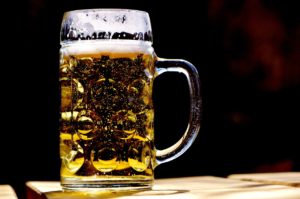
Starkbier is as the name suggest a strong beer. It is a legal generic designation for beers in which the original wort content is over 16 °P (degrees Plato). The alcohol level is between 5% and 10%. Most of them are seasonal.
In Munich, Starkbierzeit is called the 5th season. It is during Lent (From Ash Wednesday 14.02.2024 to Easter).
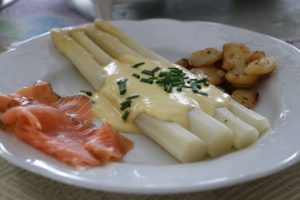
Spargel – the German white gold

Bis Johanni – nicht vergessen – sieben Wochen Spargel essen! The Asparagus season in Germany starts towards the end of April and ends on the 24th of June (St. John the Baptist Day) Most Germans eagerly await Spargelzeit and they eat around 125 000 tonnes of asparagus each season. It is very important to them to buy only German-grown asparagus. Harvesting asparagus is very labour-intensive, and is mostly done by seasonal workers. Traditionally it is served as a very simple dish, with boiled potatoes, ham and hollandaise sauce. Varieties White and green asparagus are the same vegetable.  Green Asparagus Green asparagus is grown above the ground and is exposed to sunshine “Grassy” Flavour Thinner Stalks Does not need peeling White Asparagus White asparagus is grown under mulch and dark plastic, so it gets very little sunshine and no photosynthesis. Delicate and sweet flavour Stalks are thicker Skin tends to be tougher and needs peeling Buying Stalks should be firm to the touch. Pay attention to the tips (buds). They should be firm and tightly closed. Dry or yellow tips indicate that it is already old. Avoid mushy tips. Purple tips – The colouration happens during a short period when the tip breaks through the soil, catches some sunlight and turns purple as a result, just before it is harvested. The serving size per person is around 500g Asparagus can be bought at farmer’s markets, greengrocers, small stalls along the road or in normal grocery shops.The small stalls along the road often sell strawberries as well, as these are also in season. Grades Asparagus is a delightfully succulent and nutritious vegetable that is highly in demand in Germany. This exquisite veggie is sold by the following grades in Germany. Klassen Extra They are the most expensive but worth the splash. Criteria They are very white, straight and plump and must have a diameter of at least 1.2 cm Klasse I Still pricy but more affordable Criteria Medium-sized with a diameter of at least 1 cm. They can be slightly bent and the tips may be purple. Klasse II They are much cheaper than the other classes Criteria They can curvy and the flower heads may already be open. They are most likely woody. The spears may be damaged. Bio Spargel “Organic” or “bio” asparagus must comply with the EU’s ecological guidelines The green leaf (EU BIO logo) indicates that the Asparagus is produced and sold in accordance with the EU regulations. Storing Asparagus tastes best when cooked on the day you buy it. If you are not going to prepare them on the same day, you could store them in a shallow airtight container in the fridge.You can also store them in the fridge by wrapping them tightly in foil or plastic wrap. They should last 3 – 5 days like that.Others suggest storing them standing up in a glass jar with some water inside (around 2.5 cm – enough to cover the ends). Then loosely cover it with a plastic bag and store it in the refrigerator for about a week. Preparation When preparing white asparagus, get rid of the woody ends. You can either cut them off or break them off. The following video explains how to prepare and cook asparagus.Green Asparagus usually don’t need peeling. White asparagus have thicker stalks and must be peeled. You can buy a special Asparagus peeler (Spargeschäler) to make the job easier. Here is an example of such a peeler on AmazonSome of the bigger shops have machines that peel them for you. Recipes The most classic way to eat white asparagus in Germany is with boiled potatoes, Ham and hollandaise sauce.I love baking them wrapped in foil in the oven (see recipe below or a video here), they taste much better that way. You can also throw them on a braai if you like. A surprising ingredient in most recipes is a bit of sugar, whether you bake them in foil or cook them in water. Delicious recipes can be found on the Essen und Trinken and Chefkoch websites. For English recipes, look on Germanfoods.org and My Dinner for a classic recipe. This method brings out the purest asparagus flavour — rich, tender, and never watery. Ingredients (per packet): 6–8 asparagus spears (1–1.5 cm thick) ½ tsp butter ½ tsp sugar Pinch of salt Aluminium foil (or see alternatives below) Foil Alternatives:Use a lidded baking dish, baking paper packets, roasting bags, or a soaked clay pot (like Römertopf). Oven-Steamed Asparagus in Foil Preheat oven to 200°C (180°C fan). Peel asparagus and trim the ends. Place two sheets of foil on top of each other. Add butter in the center. Lay asparagus on top, sprinkle with sugar and salt. Fold into a loose pouch (don’t wrap tightly), then fold second foil over the same way. Bake directly on the oven rack for 40–50 min. To check doneness, gently bend the packet — the softer it feels, the more tender the asparagus. Asparagus Road The 120 km long Asparagus road starts in the city of Schwetzingen. They claim to be the “Asparagus Capital of the World” and hold an annual Spargelfest.The route then passes through Karlsruhe, Bruchsal and ends in Rastatt which has the biggest asparagus farm in Europe. Many towns/regions crown an annual asparagus queen (Spargelköningin) who reigns over the festivities. Related content