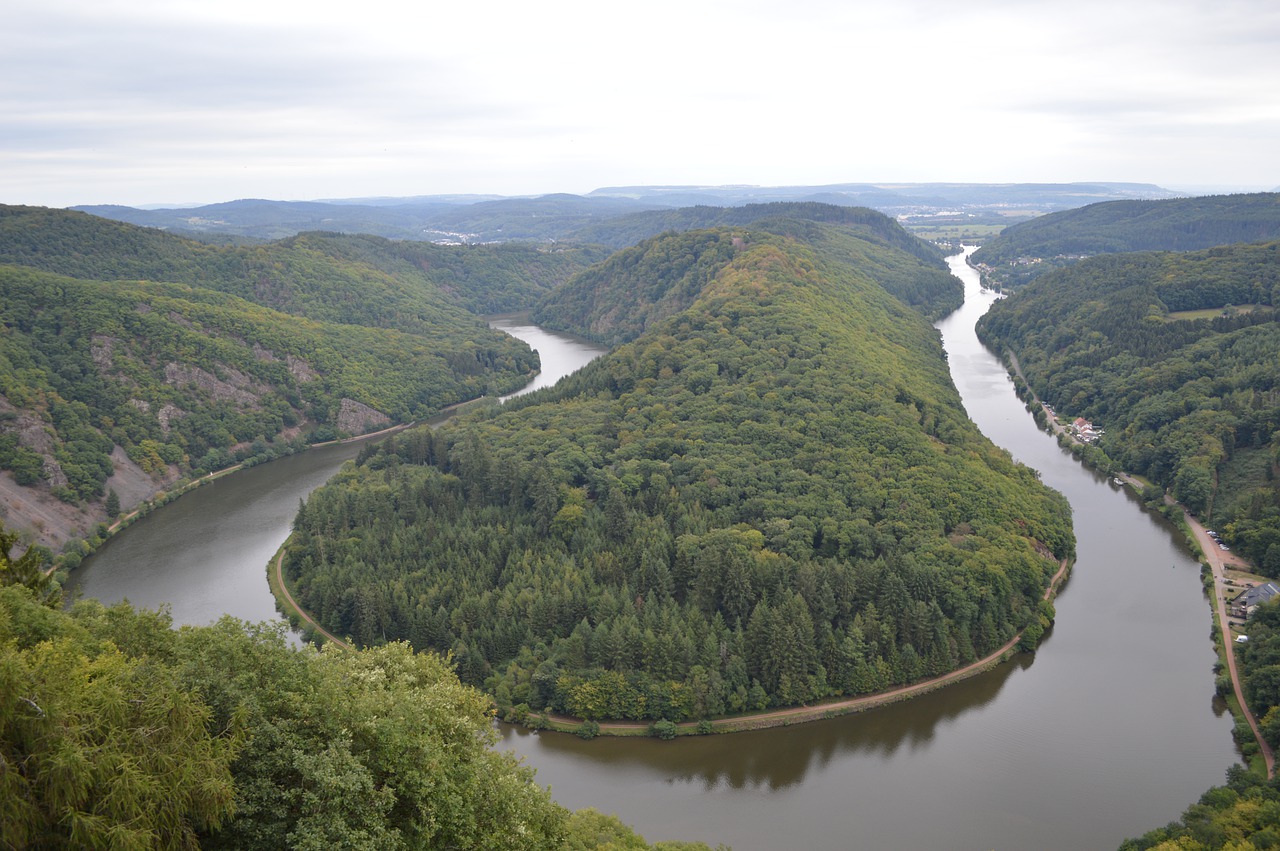
Saarland is in the Southwest of Germany and borders France and Luxembourg. Even though it is the smallest state in Germany, it has a lot to offer. It has beautiful nature, interesting museums and great breweries.
Those who love architecture will not be disappointed. Most of Saarland is covered in dense forests and is ideal for hiking.
Areas
Saarland is part of the greater Moselle wine region
Towns
- Homburg
- Merzig
- Mettlach
- Neunkirchen
- Perl
- Saarbrücken
- Saarlouis
- St. Wedel
Lakes
- Bostalsee
- Stangenwald Weiher
- Noswendeler See
- Ohmbachsee
- Keller Stausee
Things to do when it rains
Things to see and do with kids
- Hiking in Perl
- Ludwigskirche in Saarbrücken
Freizeitparks
Foods and Drinks
The following regional specialties are typical for Saarland
- Dibbelabbes
- Bettsejejer
- Gefillde
Festivals
Geheimtipps
- Schlossberg Caves in Homburg
- Treetop Walk Saarschleife near Mettlach
- Burg Montclair (Ruins) near Mettlach
- Wine tasting and cellar tours
- Borg Roman Villa outside Perl
- Saar-Hunsrück Hiking trail (410 km)
Related content

Tourist accommodation types
Types of Tourist accommodation in Germany Germany, known for its rich cultural heritage, stunning landscapes, and vibrant cities, offers a diverse range of accommodation options to suit every traveler’s needs. Here’s a guide to some of the most popular hotel types you can find in Germany, each offering a unique experience. It is important to note that these descriptions are not protected by law, and you can call your hotel a park hotel even if the park is really small. Some do have a minimum requirement, you will for instance not find a Berghotel in the valley. Finding a romantic hotel might also be a challenge. Most German hotels have two single beds, each with their own duvet. The interior is very basic and for cheaper hotels, there are no “little things” like chocolate on your pillow or flowers in the room that make your stay special. Coffee-making facilities in your room are also not very popular. Berghotel These hotels are typically located in or near mountainous regions. These hotels are designed to cater to tourists seeking outdoor activities such as hiking, skiing, and mountaineering. The offer a rustic and cosy atmosphere Location This type of hotel is located in the mountains and is mostly traditional or rustic. You typically find such a hotel in the Black Forest, in the Alps, in the Swabian Jura or in the Harz Mountains. Seasons These hotels attract a diverse range of visitors year-round. In winter, they are favoured by skiers and winter sports enthusiasts. During the summer, these hotels become a hub for hikers, bikers, and other active sports enthusiasts. Reasons to go Cosy Rustic Breathtaking views Things to consider Crowded in peak season Remote Familienhotel Designed with families in mind, these hotels provide family-friendly amenities such as play areas, children’s menus, and family suites. Many are located near popular attractions like amusement parks and zoos, making them an ideal choice for a family vacation. Reasons to go While not all facilities are available at every family hotel, you can often find options such as children’s entertainment, family-friendly rooms, child-friendly catering options, playrooms, playgrounds, childcare services, and leisure activities tailored for families. These hotels aim to create a welcoming environment for families, with some even offering spa or wellness facilities. Things to consider Family hotels are specifically designed to cater to guests travelling with children, and they typically do not accept bookings from those travelling without children. This ensures a family-oriented atmosphere and allows the hotel to focus on providing the best possible experience for families. Gasthaus/hof (Inn) A traditional, family-run inn that combines cosy accommodations with a welcoming, often rustic, on-site restaurant or beer garden. These charming establishments are found in villages and smaller city neighbourhoods. When in the countryside it is called a Landgasthaus. Reasons to go Known for their homely feel, Gasthäuser and Gasthöfe often feature wooden furnishings, local decor, and a warm, friendly atmosphere. Guests can enjoy authentic German dishes made with regional ingredients, like schnitzel, bratwurst, and seasonal specialties, often served with local beers or wines. Ideal for travelers looking to immerse themselves in local culture, these inns provide a uniquely personal, laid-back experience with a focus on German hospitality.. Things to consider Generally simpler than larger hotels, with basic amenities and often no room service, fitness centres, or other facilities associated with modern hotels. Confirm that essentials like Wi-Fi, en-suite bathrooms, and parking are available if needed. Payment options may be limited to cash or certain cards, so it’s wise to confirm these details in advance. Hotel Garni A Hotel Garni in Germany is a type of accommodation that focuses on providing comfortable lodging with a limited range of services. Unlike full-service hotels, a Hotel Garni typically offers just breakfast, without an on-site restaurant for lunch or dinner. These hotels are usually smaller, often family-run, and provide a cosy, personalized atmosphere. Rooms are well-equipped with modern amenities, and breakfast is typically a highlight, featuring a buffet of fresh, local options like bread, cheeses, cold cuts, fruits, and coffee. Reasons to go Found in cities, towns, and holiday regions, Hotel Garni is ideal for travelers who plan to explore local restaurants and attractions throughout the day, and simply need a clean, comfortable place to rest and start their day with a hearty breakfast. The focus on simplicity and convenience makes it a budget-friendly and hassle-free option. Things to consider Hotels Garni usually only serve breakfast and do not have in-house restaurants for lunch or dinner. If you prefer dining on-site, consider whether nearby dining options suit your needs and schedule, especially if you’re in a remote area. Smaller Hotels Garni may have limited staffing hours and stricter check-in and check-out times, so be sure to confirm these details if you’re arriving late or leaving early. Hütte A Hütte in Germany refers to a rustic mountain hut or cabin, often located in scenic alpine areas, forests, or national parks. Traditionally used by hikers, climbers, and nature enthusiasts, these huts provide simple, communal-style accommodations for those seeking an immersive outdoor experience. A Hütte is typically managed by organizations like the German Alpine Club (Deutscher Alpenverein) and is designed to offer shelter, a warm meal, and basic amenities to travellers on their journey. Location Mountains, forest or national parks Seasons All, but check in Winter Reasons to go Most Hütten are accessible only by hiking trails, offering stunning views and a close connection to nature. Perfect for adventurous travelers, a stay at a Hütte offers a unique experience in the German wilderness, though it comes with rustic accommodations that prioritize simplicity and sustainability. Hüttenvermietung Müller Tips for sleeping in a Hütte (German) Packing list for sleeping over (German) Rules for staying in a Hütte Things to consider Hütten are rustic by nature and usually provide only the basics—bunk beds, shared bathrooms, and a communal dining area. Facilities like electricity, hot showers, and Wi-Fi may be limited or unavailable, so expect a simple, back-to-basics experience. Booking in advance is recommended Guests should
Travel ideas within Germany
Germany is a beautiful country with diverse landscapes and many regional specialties.To add your suggestions please submit it via this form Below are some travel inspiration for each German state, and some regions and town Businesses listed on our site Travel Agents Accommodation National parks in Germany There are 16 national parks in Germany. See this list for more details. Article from lonely planet about 10 National parks in Germany. Travel inspiration Deutschlands schönste Reiseziele Discovery Germany Entdecke Deutchland (also in English) Related content
Weather in Germany
Weather in Germany Germany has four distinct seasons — and each one comes with its own rhythm,rules, and vocabulary. From steady rain and freezing fog to summer stormsand winter frost, the weather plays a quiet but constant role in everyday lifelife. Understanding the weather also means understanding the language the Germans use to describe it. German Climate Germany’s climate is temperate and marine, with cold, cloudy winters and warm summers and in the south occasional warm föhn wind. The greater part of Germany lies in the cool/temperate climatic zone in which humid westerly winds predominate. In the northwest and the north, the climate is oceanic and rain falls all year round. Winters here are relatively mild and summers comparatively cool.In the east, the climate shows clear continental features; winters can be very cold for long periods, and summers can become very warm. Dry periods are often recorded. In the centre and the south, there is a transitional climate that may be predominantly oceanic or continental, according to the general weather situation. Winters are cool and summers warm, though maximum temperatures can exceed 30 °C for several days in a row during heat waves. The warmest regions of Germany can be found in the southwest.Here summers can be hot with many days exceeding 30 °C. Weather atlas gives a good overview of the climate per month Another good source of information by Region/Town is the Climatemps website. Here is an example of the weather data they have for Stuttgart Current weather conditions BERLIN WEATHER STUTTGART WEATHER FELDBERG WEATHER Towns with the most sunshine Freiburg and Chemnitz are known as the towns with the most sunshine hours in Germany.Looking for other sunny cities in Germany? You can see a comparison here. When you don’t feel yourself during the darker months, you might suffer from Seasonal affective disorder. Warmest cities in Germany While many cities in Germany can get quite warm in summer, Offenbach am Main consistently ranks among the warmest places in Germany when looking at average annual temperatures, and is often warmer than larger neighbours like Frankfurt and Köln.On the other end of the scale, Rostock on the northern coast is generally cooler on average, especially in summer months.Frankfurt itself has pleasantly warm summers but isn’t officially the single warmest city compared with detailed climate averages. Most Rainfall per city Halle / Saale has the least rainfall. It also seldom rains in Erfurt, Berlin and Magdeburg – they still have little sunshine (3.8 to 4.4 hours/day).According to Bild, A lot of rain falls in Oldenburg (1072 milliliters), Remscheid (942), Essen (931), Solingen (896) and Wuppertal (866).This means that North Rhine-Westphalia is not only one of the regions with the poorest sunshine but also one of the rainiest regions. Where to find the most Snow The snowiest location in Germany is the Zugspitze, standing at an elevation of 3,000 meters. While snow is most common in mountainous regions, lower-lying areas also experience snowfall, though less frequently. The heaviest snowfall typically occurs in January and February. Bergfex iSKI Snow-forecast.com DWD Weather Warnings Types of weather conditions Precipitation refers to any form of atmospheric moisture that falls to the Earth’s surface. There are various types of precipitation that can occur depending on the temperature and atmospheric conditions in a particular region. The most common types of precipitation include rain, snow, sleet, and hail. Germany doesn’t just have “rain” or “snow” — it has very specific words depending on how it falls, how long it lasts, and what temperature it arrives at.This table explains the most common German weather terms you’ll hear in forecasts, apps, and daily conversations — in plain English. German English Explanation der Regen Rain Rain occurs when liquid water droplets in the air combine and become heavy enough to fall to the ground. der Hagel Hail Hail is formed when strong updrafts carry water droplets high into the atmosphere where they freeze and are repeatedly cycled, forming layers of ice. der Dauerregen Persistent rain Continuous rainfall with more than 0.5 mm per hour for at least six hours. US National Weather Service explanation der Sprühregen / der Nieselregen Drizzle Very fine droplets that appear to float but still fall to the ground. Often occurs together with fog. der Graupel Graupel Also known as snow pellets. Snowflakes coated with ice, typically white and opaque. der Eisregen Freezing rain Supercooled raindrops that freeze on contact, forming a layer of ice on surfaces. der Schneeregen Sleet Frozen raindrops that freeze before reaching the ground. Often occurs just before snowfall. der Schnee Snow Snow forms when water vapour freezes into ice crystals. der Nebel Fog Suspension of water droplets reducing visibility to under 1 km. Often described as a cloud at ground level. der Dunst Mist Less dense than fog, visibility over 1000 m. der Eisnebel Freezing fog Freezing fog is just like regular fog, but because the air and ground are well below freezing, the tiny water droplets in the fog freeze as soon as they touch things like trees, roofs and wires. That’s what makes them look white and frosty. This kind of ice build-up is called rime ice or hoar frost — nature’s own winter sculpture. Hoarfrost – feathery, delicate ice crystals that form when moisture freezes directly onto surfaces. Very fairytale.Rime ice – denser, chalky-looking ice caused by freezing fog droplets hitting objects. Looks like someone dusted the trees with flour. der Frost Frost Occurs when surfaces cool below the dew point. In Germany, severe frost is mostly limited to mountain regions. die Gewitter Thunderstorm Storm with lightning and thunder caused by rising air currents. der Blitz Lightning Electrical discharge between clouds or between cloud and ground, releasing enormous energy. ❄️ Winter Hazards in Germany – What to Watch Out For Winter risk What it is Why it’s dangerous What to watch out for Black ice (Blitzeis / Glatteis) Nearly invisible layer of ice on roads and pavements Extremely slippery and hard to detect Common near 0 °C, on bridges, shaded areas, early mornings. Walk

You must be logged in to post a comment.