Skip to content

Mosbolletjies

Soft, sweet, fragrant with aniseed and tradition — mosbolletjies are more than just bread rolls. They carry memories of family kitchens, handwritten recipes, and the unmistakable comfort of home.

On this page, South Africans in Germany share their treasured mosbolletjie recipes, baking tips, and little secrets that make every batch special.

Because some recipes don’t just feed people — they keep traditions alive.

From Our Community Kitchens

Submitted by Yvette Antoinette von Solms
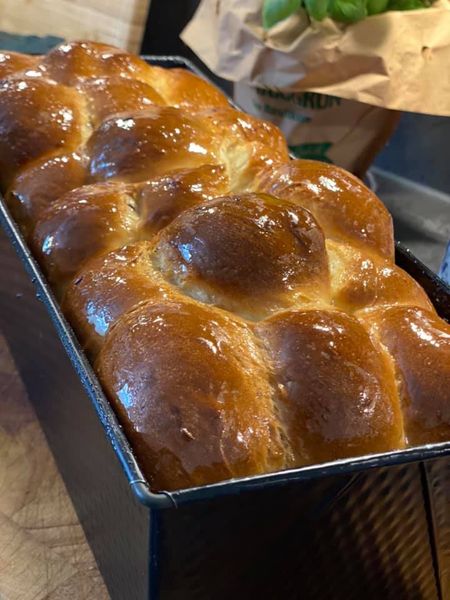
Special Federweisser Mosbolletjie Recipe from Cathy's Ouma

Ingredients

(for 3 large bread pans — you can adjust the proportions for a smaller batch if desired)

  • 3 kg cake flour
  • 3 cups sugar (I usually take 1 cup because the Federweisser is already so sweet)
  • 3 tsp salt
  • ⅓ cup aniseed
  • 250 g butter
  • 1 litre Federweisser and enough milk to make a total of 1.8 L of liquid


For the glaze:

  • 100 ml milk
  • ¼ cup sugar (I use about half of the sugar)
  1. Mix the flour, sugar, salt and aniseed in a deep mixing bowl.
  2. Melt the butter and add the Federweisser and lukewarm milk to it.
  3. Combine the liquids with the dry ingredients and knead well for about 30 min.
  4. Allow the dough to rise overnight in the bowl. You may want to cover it with a lid (like a plate) and keep it somewhere warm.
  5. On the next morning, knock down the dough (a fancy way of saying knead it again), and separate the dough into three equal pieces (you can weigh it to ensure that all three are the same). Preheat the oven to 180 ºC.
  6. Roll out each of the three pieces of dough and then divide each of the three pieces into 12 buns. These will bake together and rise out of the top of the bread pan.
  7. Bake for 30 min at 180 ºC and then turn down the oven to 140 ºC and bake for another 40 min. Use a skewer to check that the mosbolletjies are baked through before removing them from the oven.
  8. Turn the mosbolletjies out onto a drying rack and then glaze (as per the recipe above) the top while still warm.
  9. Allow to cool completely.
  10. Eat with butter and jam/cheese or dry in the oven for rusks (mosbeskuit; 50 ºC for 6 hours).

Traditional Mosbolletjies

For the Starter (“Mos”)
  • 500 g raisins
  • 1.5 litres of water
  • ½ compressed yeast cake OR 7.5 ml (½ tbsp) active dry yeast

For the Dough
  • 5 kg white bread flour
  • 500 g butter or margarine
    OR
    250 g butter + 250 g lard/dripping
  • 1 litre of sugar
  • 15 ml salt
  • 30 ml aniseed

Glaze
  • 1 egg yolk
  • A little sugar
  • A little milk
  1. Crush the raisins slightly, but do not remove the seeds. Boil the raisins in the water for 10 minutes and allow to cool until lukewarm.
  2. Place the raisins in an enamel or glass bowl. Add 125 ml of the lukewarm raisin water and the yeast. Stir well and leave in a warm place until the raisins float to the top, about 24–36 hours.
  3. Strain the liquid from the raisins through a clean cheesecloth and use this liquid as the starter.
  4. Mix 1 litre (about 4 cups) of the flour with the strained liquid until smooth. Leave in a warm place for 3–4 hours until the sponge has risen well.
  5. Melt the butter (or butter and lard mixture) and add a little boiling water.
  6. Combine the remaining flour, sugar, salt, aniseed, sponge mixture and melted butter. Add enough warm water to form a stiff dough.
  7. Knead the dough very thoroughly for at least 1 hour, until small air bubbles are evenly distributed throughout the dough.
  8. Cover the dough well and leave overnight in a warm place.
  9. The next morning, do not knead the dough down. Shape into small balls and place close together in large greased bread pans, about 6–8 rolls per pan.
  10. Leave the rolls in a warm place until doubled in size again.
  11. Mix the egg yolk with a little milk and sugar and brush it over the rolls. Bake at 200°C for about 1 hour until golden brown.

Tips

Baking Tips

German flour behaves differently from South African flour, so don’t panic if your dough feels wetter or firmer than expected.

  • Type 550 flour usually works best for soft mosbolletjies.
  • If the dough feels too sticky, resist adding too much extra flour too quickly.
  • Bread flour can give a chewier texture, while cake flour creates softer buns.

Pack The Dough Balls Snugly

Mosbolletjies are traditionally packed closely together in the pan.
That’s what creates the beautiful pull-apart shape and soft sides.

Brush While Hot

Brushing the tops with sugar syrup, honey butter, or melted butter immediately after baking gives mosbolletjies their glossy finish and soft top crust.

Share Your Mosbolletjie Recipe With Our Community

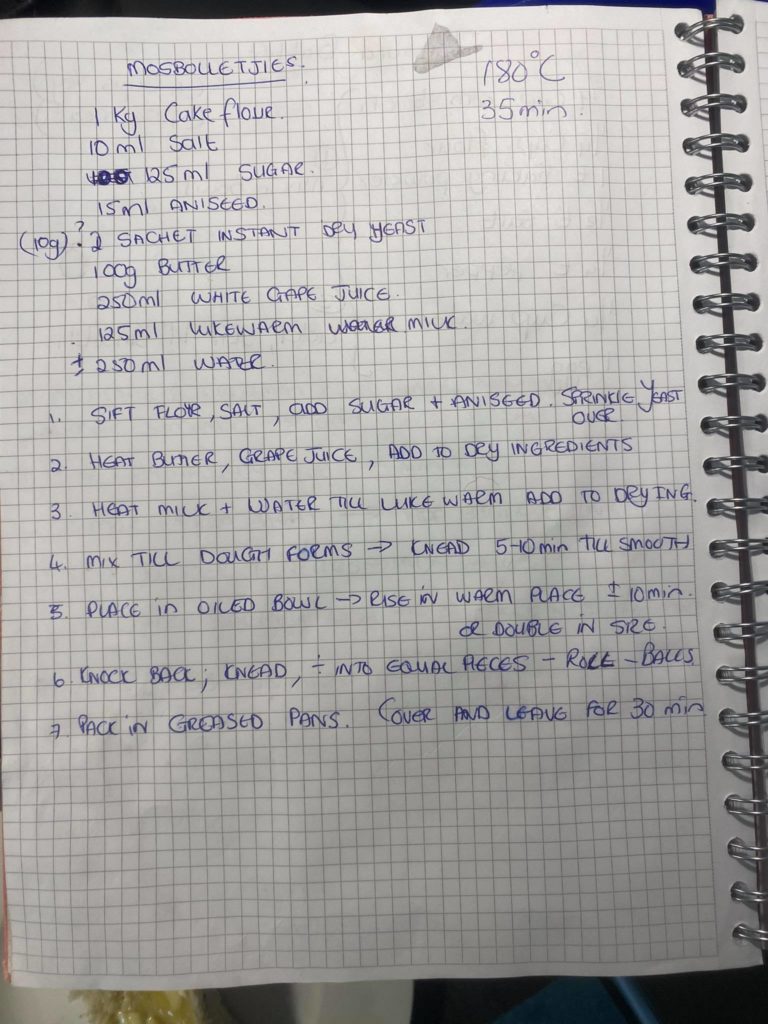
Every mosbolletjie recipe carries a little history with it — a family tradition, a Sunday kitchen memory, a handwritten notebook page stained with flour and butter. Some recipes have travelled from South Africa to Germany in suitcases and memory alone.

If you have a favourite mosbolletjie recipe, we’d love for you to share it with our community. Whether it’s a traditional family recipe, a modern version adapted for German ingredients, or even a treasured handwritten note from Ouma’s kitchen, your recipe could help someone else recreate a small taste of home far away.

Because the best recipes are the ones that continue to be shared.

Add your Recipe

Add your Recipe. You can easily add your favourite recipe to our extensive collection, which will be proudly published on our website. Check out the mouth-watering recipes already featured on our page. For each recipe, you can include up to two tantalising pictures that will make everyone’s taste buds tingle.  – If you only have the recipe as a photo and do not want to type it out, share the photo in the Upload files section, and we will type it out

Related content

Lazy Bum Sausage-rolls

1-2-3 Easy Snack-size Sausage-rolls for “Lazy Bum“ wannabe chefs like me – from Wayne Van Der Merwe Ingredients1 big pack of Ćevapčići ,2 rolls Blätterteig1 Egg  Pre heat the oven to 200°C for 35min Roll out the dough and place the Ćevapčići on the dough Roll the dough around the Ćevapčići Poke it with a fork to keep the dough from raising away from the meat Beat one egg and brush the dough with the
Bread Recipes

You can read about the different types of Flour on our Baking ingredients section. Take note that the baking powder in Germany is single acting. The baking powder is South Africa is double acting. You can also read about this on the above-mentioned page. BEER BREAD ALLA YVETTE Set the oven to 180 ℃ * 1Kg cake flour (405)* 10ml salt* 1 T/s Herbs (Kreuter der Provence)* 15ml sugar* 100g Butter* 2 sachet dry yeast*
Beskuit

Rusks / Beskuit

Rusks / Beskuit A Taste of Home, One Dunk at a Time Craving that comforting crunch with your morning koffie?Beskuit — or rusks, if you must — is more than just something to dip. It’s tradition. It’s memory. It’s a quiet morning wrapped in a warm blanket, wherever in the world you find yourself.Here you’ll find recipes shared by South Africans living in Germany Important Info 🥣 Self-Raising Flour Self-Raising Flour Isn’t Common in Germany Most

Facebook
Twitter
LinkedIn
WhatsApp
Email