When in Germany… Visit a Beer Garden!
A South African’s guide to soaking up summer the Bavarian way
End of Content.
Starkbier is, as the name suggests, a strong beer. It is a legally recognised generic designation for beers with an original wort content of over 16 °P (degrees Plato). The alcohol content typically ranges between 5% and 10%, and most Starkbiere are brewed seasonally rather than year-round.
In Munich, Starkbierzeit is affectionately known as the fifth season. It traditionally takes place during Lent, beginning on Ash Wednesday, 18 February 2026, and running through to Easter, which falls on 5 April 2026. Rooted in monastic brewing traditions, these strong beers were originally created to sustain monks during fasting — liquid bread, as the old saying goes. While Lent remains the heart of Starkbier season, some styles are also brewed for the winter months and may appear around Christmas.
Strong beer, strong tradition — Germany at its most honest and unfiltered.
Lent, that solemn season of fasting and reflection, once posed a unique challenge for the monks of southern Germany. Solid food was restricted, but liquid was fair game. And so, with typical Bavarian ingenuity and inspiration, the monks of the Paulaner order in Munich began brewing a special beer: one that was not only strong in alcohol but also hearty, nourishing, and full of sustaining goodness.
This “liquid bread”, known as Doppelbock, became a vital part of their Lenten survival. Rich in malt, calories, and flavour, it provided enough sustenance to keep both body and spirit nourished. Over time, this once-sacred brew became a beloved tradition beyond the monastery walls.
To honour its monastic roots, many Munich breweries name their strong beer varieties with the suffix “-ator” — a nod to the original Salvator, the Doppelbock first brewed by the Paulaner monks. Today, names like Optimator, Maximator, and Triumphator line the shelves, carrying on the legacy of holy indulgence with every sip.
Starkbier isn’t just stronger — it’s a tradition steeped in faith, fasting, and flavour.
The following beers are classified as Starkbier
This beer is much stronger and made by partially freezing the beer and removing the resultant ice crystals, intensifying its flavour and aroma profile.
A bold, full-bodied take on classic wheat beer. Brewed with 60–70% malted wheat and top-fermenting yeast, Weizenbock blends the fruity notes of banana and clove with the strength and richness of a Bock. Deep amber in color, smooth on the tongue, and packing a warming 7–9% ABV — it’s a wheat beer with muscle and charm.
All strong beers, high in alcohol, derived from a bottom-fermenting yeast and brewed using dark roasted malt, are known as Bockbier.
A delicious and refreshing beer that is only available for a limited time between April and June. Also referred to as Hellesbock. With its rich golden colour and smooth malty flavour, it is the perfect beer to celebrate the arrival of spring.
A powerful, dark wheat beer that takes Weizenbock to the next level. Rich, malty, and full-bodied, this brew delivers intense notes of dark fruit, caramel, banana, and spice. Stronger and darker than its sibling, with an ABV often pushing 9% or more — it’s the velvet hammer of the wheat beer world.
Doppelbock is a rich, malty lager originally brewed by monks to sustain them through fasting. Stronger than a traditional Bock (usually 7–10% ABV), it boasts deep caramel flavours, toasted bread notes, and a smooth, warming finish. A true classic with both strength and soul.
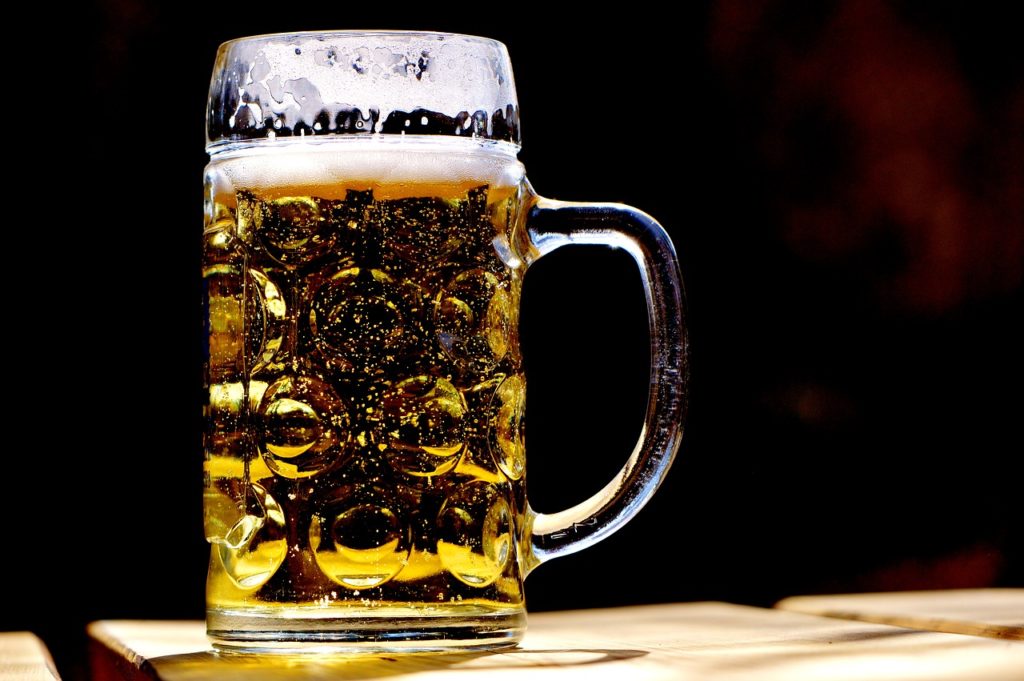
Strong beer isn’t just a drink — it’s an experience. Traditionally, it’s served in a sturdy Krug (beer stein), but a Willybecher, the standard tulip-shaped beer glass, also does the job.
For more aromatic styles like Maibock, glassware becomes even more important. Use one that tapers at the top to trap those intense aromas. When in doubt, a Pilstulpe is a far better choice than a simple cylindrical beer jug.
If you’ve have one, a Seidel or Tankard with a bulbous belly is ideal; it lets the beer breathe and bloom as you sip.
And don’t serve it ice-cold! These strong beers shine at a warmer 10–13 °C, where all those rich, malty flavours and spicy, fruity aromas can fully unfold.
Slow sips, proper glass, right temp — that’s how to do Starkbier justice.
Strong beer isn’t just a drink — it’s an experience. Traditionally, it’s served in a sturdy Krug (beer stein), but a Willybecher, the standard tulip-shaped beer glass, also does the job.
For more aromatic styles like Maibock, glassware becomes even more important. Use one that tapers at the top to trap those intense aromas. When in doubt, a Pilstulpe is a far better choice than a simple cylindrical beer jug.
If you’ve have one, a Seidel or Tankard with a bulbous belly is ideal; it lets the beer breathe and bloom as you sip.
And don’t serve it ice-cold! These strong beers shine at a warmer 10–13 °C, where all those rich, malty flavours and spicy, fruity aromas can fully unfold.
Slow sips, proper glass, right temp — that’s how to do Starkbier justice.
Below are a few Starkbiere worth seeking out, each with its own character, best enjoyed slowly and preferably in good company.

A South African’s guide to soaking up summer the Bavarian way

Outdoors South Africans are born for the outdoors. And yet in Germany, where skies shift mood in minutes, embracing every kind of weather—sunshine, drizzle, wind—is the only way to live truly. Wrap yourself in layers that laugh in the face of rain, wind, and frost. With the right gear, there’s no such thing as bad weather—just the pure joy of being outside, no matter the sky. 🌦️ The best outdoor activity is, of course, enjoying

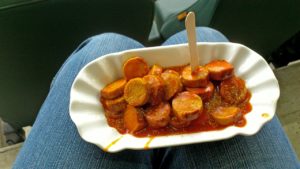
Currywurst was apparently first made by Herta Heuwer in Berlin in 1949. She got the tomato sauce (Ketchup) and curry powder from British soldiers stationed in Germany. She originally served it with pork sausages and it soon became popular with constructions workers as an easy and fast meal. It is reported that she sold more than 10 000 currywurst per week.

You must be logged in to post a comment.