
Skip to content

Potjiekos – Slow Cooking, Strong Traditions

Where good food takes its time… and the best memories are made around the fire.
Discover authentic recipes, essential tips, and where to find your own potjie in Germany.

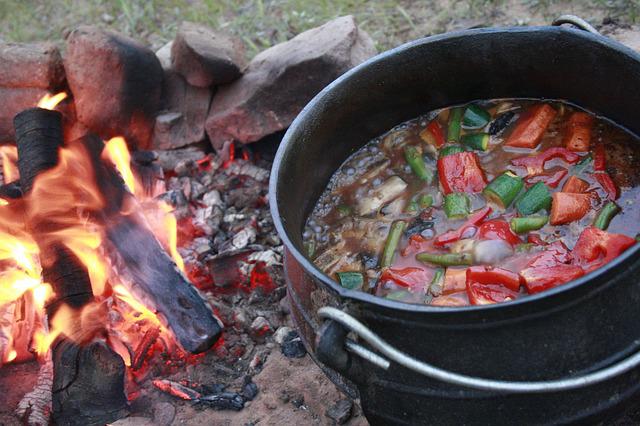
Potjiekos isn’t just a meal—it’s a ritual. Layered, never stirred, and cooked slowly over coals, it brings together rich flavours and even richer company. You might be recreating a taste of South Africa or discovering it for the first time—either way, you’re in the right place.

Biltong potjie - Submitted by Wanda du Plessis

6 Uie
1 Pak Sampioene
n Halwe Kg biltong (Nie te vetterig nie)
1 Blik Pitmielies
1 Pak, gedraai of skulp, noedels
‘n Halwe Green Pepper
2 Houertjies vars room
‘n Redelike stuk gerasperde kaas

 1 Braai uie en sampioene tot dit gaar is
2 Voeg biltong by
3 Voeg gaargemaakte noedels by
4 Plaas green pepper en pitmielies bo-op
5 Rond af met 2 houertjies room en baie gerasperde kaas
6 Maak potjie toe en smoor totdat green peppers sag is en kaas lekker gesmelt het.

Potjie Recipe by Hila

Ingredients:

  • 1 kg Meat of choice, tougher cuts work best as they have the most flavour and can withstand the long cooking time. E.g., lamb neck, Beef shin, brisket, oxtail
  • 3 large onions sliced
  • 3 cloves of garlic (or as many as your ancestors wish), whole or roughly chopped
  • 2 sprigs of rosemary or thyme. or both
  • 250 ml stock of choice, depending on the meat you use
  • 250 ml of wine, generally red for dark meats, white for light. For alcohol free, replace with more stock
  • 3 large potatoes chopped
  • 1 kg mix of vegetables of your choice, carrots, baby marrow, mushrooms, peppers, etc.
  • Salt and pepper to taste.
  • Samp*, Pap* or Rice

Getting it done:

  • Get your fire going and get your potjie nice and hot.
  • If you are using a stove and oven, heat the pot on medium-high. Preheat your oven to 160° C
  • Season your meat generously.
  • Heat your oil up and then brown your meat; set it aside.
  • Move the potjie so it gets indirect heat from the fire, and throw in your onions, sauté until the onions are translucent.
  • If you are using a stove, drop the heat to medium.
  • Add the garlic and herbs, mix for a minute.
  • Add the meat back in, followed by the wine and the stock and bring to a simmer for an hour.
  • For oven cooking, place the pot into the oven at this point.
    Shift your pot, or your coals, to keep the pot simmering with the lid on.
  • At this point, taste to see if the seasoning needs adjusting and then add the potatoes and harder veg.
  • Do not mix.
  • Allow to simmer for another 30 minutes (or until the hard veggies are fork-tender)
  • Add in any softer veggies (baby marrow, mushrooms, peppers, cherry tomatoes) and simmer for another 10-15 minutes.
  • Serve hot on a bed of pap, samp or rice with some chutney on the side.

Potjie vs Dutch oven

A South African potjie and a Dutch oven may look similar, but they’re made for very different cooking experiences.
A potjie is designed for open-fire cooking, with three legs that stand directly in the coals and a rounded shape that allows ingredients to be layered and slow-cooked without stirring—building deep, rich flavours over time.

A Dutch oven, on the other hand, is a more versatile kitchen tool with a flat base, designed for stovetops, ovens, or even campfires, where stirring and adjusting the dish are part of the process.

In simple terms, a potjie is about tradition, patience, and shared moments around the fire, while a Dutch oven is about everyday convenience and flexibility.

Where to buy a potjie

The following online shops sell Potjies:

Using a Dutch oven over a fire

Cooking with a Dutch oven over an open fire is a return to simple, time-honoured methods — where glowing coals, not flames, do the real work.
You can place the pot directly on coals with additional heat on the lid for true oven-style cooking, hang it over the fire for gentle soups and stews, or set it on a stable surface.
For slower, deeply flavourful meals, some even bury the pot in a bed of coals. Whichever method you choose, the secret lies in controlling the heat and letting patience do its quiet magic.

Directly on the Coals

Directly on the Coals

Let your fire burn down to glowing coals (not flames!)
Place the Dutch oven directly on the coals
Add hot coals on top of the lid for even heat (like an oven)
Best for Bread, stews, casseroles, potjies, even cakes
Hanging Over the Fire

Hanging Over the Fire

Hang the pot from a tripod or hook over the fire
. Adjust height to control heat.
.Best for: Soups, broths, boiling water, slow stews
On a Stable Surface

On a Stable Surface

Place your Dutch oven on a stable surface over the fire — this could be a grill grate, a fire rack, or a metal stand (often called an “Abstellfläche,” like a Pfannenknecht)
The fire burns underneath while your pot sits securely above it
Best for: Frying, simmering, and easy one-pot meals

Share your recipe with us

Good food is meant to be shared—and a proper potjie even more so. If you have a favourite recipe tucked away in your kitchen (or written on a well-loved scrap of paper), don’t keep it to yourself. We’ve made it easy for you to share it with the community—just click here, fill in the quick form, and pass your potjie recipe on. Because the best recipes aren’t just cooked… they’re handed down.

Meat and fish

German and South African meat cuts don’t always match up, which can make following familiar recipes a bit tricky. On our Meat page, we break down the German cuts and share a selection of trusted online shops where you can find the right meat.

Meat

🇿🇦 Meat the Difference: A South African’s Guide to Buying Meat in Germany 🇩🇪 Looking for proper boerewors? Wondering why German Rindfleisch doesn’t taste quite like home? Or scratching your head at all the unfamiliar beef cuts?Get to know the difference between German and South African beef cuts, learn the right words at the butcher, and discover where to find quality meat that feels like home. German beef cuts German Cut English Equivalent Notes Rinderhals

Fish and Seafood

Fish and Seafood From Snoek to Seelachs: A Taste of Home Beneath German Waters Craving that perfect piece of hake? Looking for prawns that remind you of home? We’ve put together a list of the best places across Germany to buy fresh seafood — from speciality shops to supermarket counters that stock the good stuff. You’ll also find a handy vocabulary guide so you can confidently tell your Seelachs from your Heilbutt — no more guessing

Related Content

“Garage” pies

“Garage” pies Foodies SA has the perfect Garage pie recipe with video instructions Here is the video and the recipes. Visit their page for more yummy recipes https://www.youtube.com/watch?v=zBPNDIEtGOs Pepper steak Pies 2 sheets (400g each) store-bought puff pastry, thawed 2 tbsp (30ml) oil 500g beef steak, cut into 1.5×1.5cm cubes

Read More »

Grilling in public

Grilling in public When you do not have braai facilities at home or want to have more space while meeting your friends for a braai, you can use the grills/fireplaces at a public Grillplatz/grill area.These are usually in bigger parks or around lakes. Grilling in the forest is generally prohibited,

Read More »

Making your own Biltong

Making your own Biltong There’s nothing quite like the rich aroma of freshly made biltong — that blend of coriander, vinegar, and nostalgia. Whether you’re in Berlin, Munich, or a tiny German village, you can craft your own slice of South Africa right here in Germany. Discover what you need,

Read More »

Raclette

The summer months are gone, and for most of us, it is too cold to have a braai with our friends. A great alternative is to have a Raclette party at home.For those who are not familiar with Raclette, it is a dish originating from Switzerland. The history behind the

Read More »

Braai Season

Summer has finally arrived in Germany — and with it, that unmistakable itch to light the fire, gather your people, and kuier around the braai.But before you strike the match, there are a few German rules and realities you need to know… because here, even a braai comes with regulations.

Read More »

Lemon Meringue Recipes

Lemon Meringue — Sarie Mueller 1 Blik Kondensmelk3 groot eiers1/2 koppie suurlemoensap (ek vat bietjie meer – seker so 3 groot eetlepels ekstra)1/2 koppie strooisuiker (het bietjie minder gebruik)So ongeveer 200 g Frischkäse / Maaskaas / Quark, wat ookal sodat dit minder soet is. Tertkors van jou keuse – hier

Read More »
Facebook
Twitter
LinkedIn
WhatsApp
Email